


Are you struggling with fuzzy edges, adhesive bleed, or telescoped rolls when slitting label stock? This waste hurts your profits and reputation.[1] The right machine configuration is the key.
To get clean edges and stable rewinding for label stock, you must match the cutting method and rewinding system to your specific material’s face stock, adhesive, and liner properties. It is a complete system decision, not about a single feature or brand name.)[2]
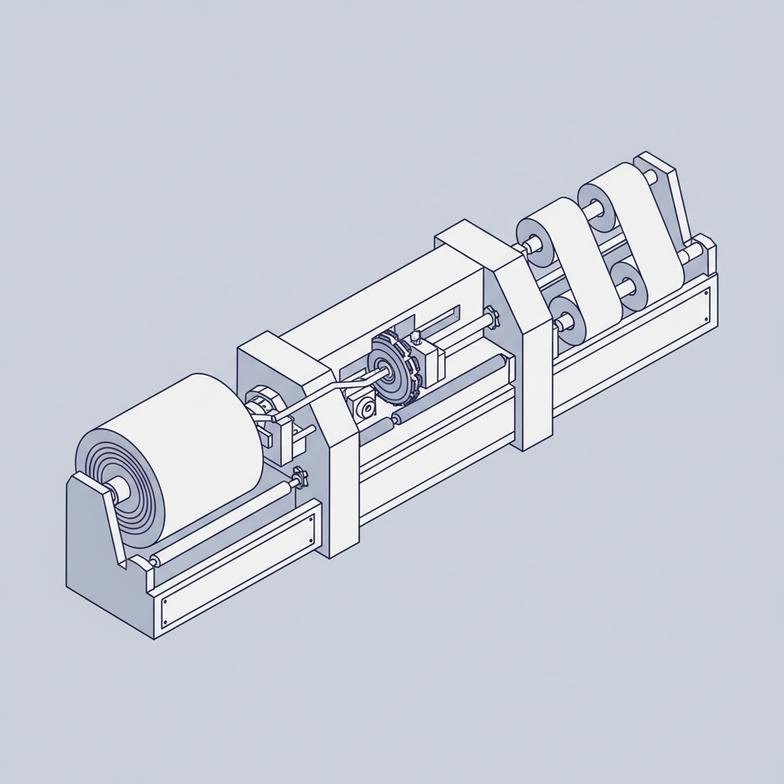
Many label converters think a wider, faster machine is automatically an upgrade. But with a composite material like label stock, the small details are what truly matter for quality and efficiency. A machine that works perfectly for paper labels might fail completely when you run a thin filmic label stock. Getting this right from the start saves you from future headaches, material waste, and customer complaints. Let’s break down the key decisions you will face, starting with the one that most impacts your edge quality.
How Do You Choose the Right Cutting Method for Clean Edges?
Are you tired of dusty, fuzzy edges on your paper-faced labels or burrs on your filmic stock? This dust contaminates your finished rolls and can cause problems in subsequent printing or application.[3]
To choose the right cutting method, you need to evaluate your label stock’s layers. Shear cutting is often better for paper-faced stock because it minimizes dust.[4] Razor blades can work well for certain filmic stocks, but matching the blade type to the material is essential to prevent edge defects.
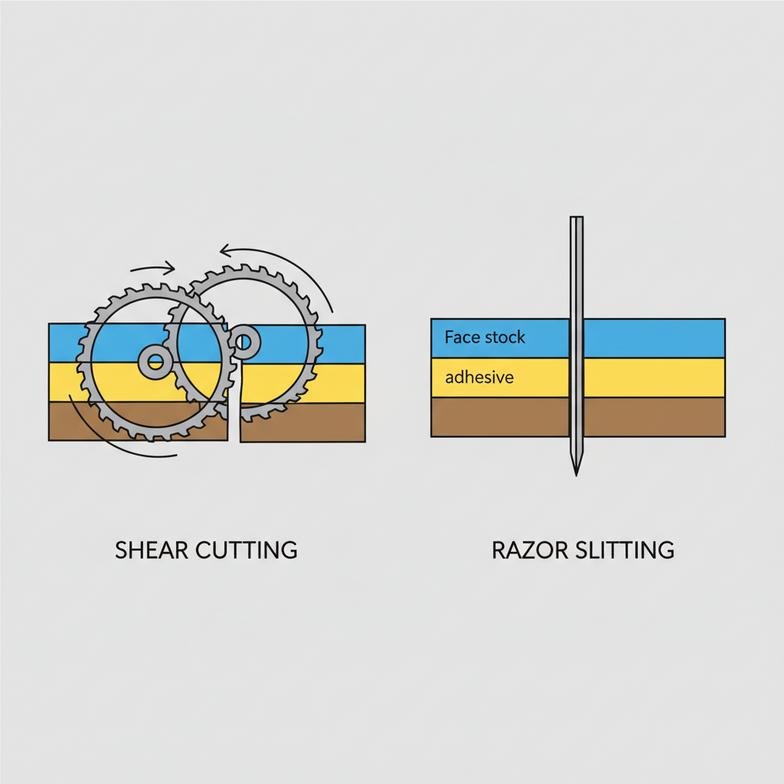
A common question we receive is, "Which blade is best?" But the question should be, "Which cutting system is best for my material?" Label stock isn’t just one material; it’s a sandwich of face stock, adhesive, and a release liner. Each layer behaves differently during slitting. The choice between razor blades and shear cutting (also known as circular knife cutting) is a critical decision based on these layers. In our experience, forcing the wrong method is the number one cause of poor edge quality.
Razor vs. Shear: A Material-Based Decision
Here is a simple breakdown to help you understand the trade-offs.
| Cutting Method | Best For… | Main Advantage | Main Disadvantage |
|---|---|---|---|
| Razor Slitting | Thin filmic face stocks (PET, BOPP) | Clean cut on films, low-cost initial setup | Not for paper; can snag fibers and cause dust |
| Shear Slitting | Paper-faced stock, thicker materials | Minimizes dust, clean cut on tough materials | Higher initial cost, requires precise knife setup |
Paper contains fibers. When a razor blade tries to slit it, it can tear these fibers, creating a fuzzy, dusty edge. Shear slitting works like a pair of scissors, with a top and bottom knife cleanly slicing through the material. This action contains the fibers and gives you a clean, dust-free edge. For thin films, a razor blade can work very well if the web tension is perfect. However, if your adhesive is prone to bleeding, it can build up on the razors and ruin the cut quality.[5] For this reason, a shear system is often a safer, more versatile choice.
What Makes Rewinding Label Stock So Challenging?
Do your finished rolls telescope, feel too soft, or have trapped air between the layers? These issues cause major problems on your customer’s automatic labeling lines, leading to machine jams, complaints, and returns.
Rewinding label stock is challenging because it is a composite of face stock, adhesive, and a liner, each with different properties. Unstable rewinding comes from mismatched tension control. The solution is choosing a rewinding method—center, surface, or center-surface—that correctly manages the roll’s structure.
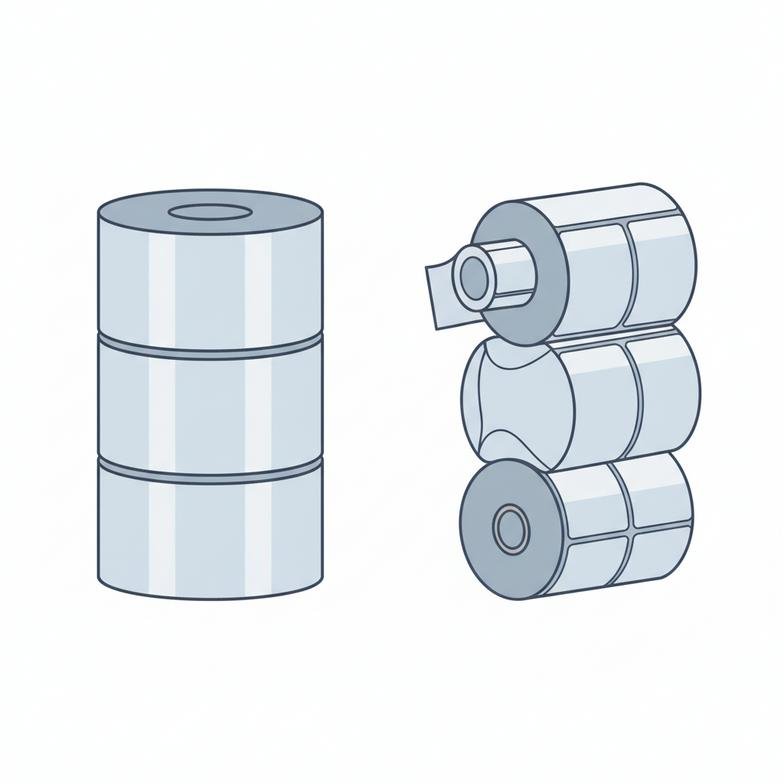
When customers report issues with uneven rewound rolls, the first thing we investigate is their rewinding system. Label stock is not a single, uniform web like a simple paper or film. The face stock might stretch differently than the release liner. The adhesive can act as a lubricant or, conversely, create drag. Slippery release liners are especially notorious for causing layers to shift, resulting in telescoped rolls[6] where the core is pushed out. Simply applying more tension is not the answer; in fact, it can stretch the material or cause the adhesive to ooze out at the edges.[7] You need a system that builds a stable roll from the core outwards.
Choosing Your Rewinding Method
The rewinding method dictates how force and tension are applied to the finished roll.
- Center Rewinding: The rewind shaft is driven from its center. This is good for sensitive materials because tension is controlled directly at the core. However, as the roll gets bigger and heavier, it can be difficult to maintain consistent roll density, sometimes leading to soft rolls.[8]
- Surface Rewinding: A large drum makes contact with the outer surface of the roll, turning it. This method creates very dense, hard rolls. But for delicate face stocks or labels with exposed adhesive, the constant pressure can cause damage or adhesive bleed.[9]
- Center-Surface Rewinding: This is a hybrid system that uses both a driven core and a contact drum. In our experience, this provides the best control for a wide variety of label stocks.[10] The center drive manages web tension, while the contact drum controls roll density and prevents slippage between layers. This combination is highly effective at stopping telescoping, especially with slippery liners.[11]
Why Do Good Suppliers Ask So Many Questions Before Quoting?
Are you frustrated when a supplier will not give you a quick price for a "1300mm slitter"? A fast quote for a generic machine is a big risk. It can easily lead to you buying equipment that fails.
A knowledgeable supplier asks many questions to understand your exact needs before quoting. They must know your material type, thickness, adhesive, and production goals to configure the right cutting, tension, and rewinding systems. This approach protects you from buying a mismatched machine.
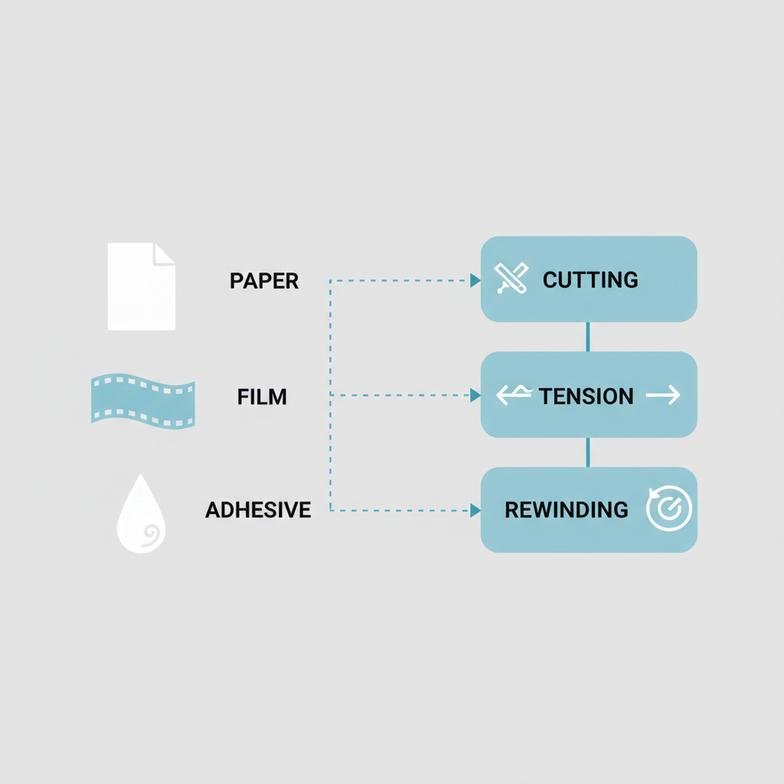
I have seen the consequences when a buyer chooses a machine based on width and price alone. The machine arrives, but it cannot handle their specific material. The edges are bad, the rolls are unstable, and waste skyrockets. The most common buyer mistake is asking for a feature (like a turret rewinder) without first defining the production problem it is supposed to solve.[12] A turret system is great for high-volume production with many short rolls, but it is an unnecessary expense if you run long jobs with few changeovers. A good supplier acts like a consultant to prevent these mistakes. Their questions are a sign of experience, not a sales delay.
Key Questions We Ask (and Why)
When you contact a supplier, their questions tell you a lot about their expertise. Here are some of the first things we ask to make sure we recommend a machine that will actually work for you:
- What are your face stock and liner materials? This tells us whether to start with a razor or shear cutting system and what tension range is needed.
- What type of adhesive do you use? This helps us anticipate issues like adhesive bleed on blades or rollers.
- What is your minimum slit width and target finished roll diameter? This affects the design of the rewinding shafts and overall machine stability.
- What are your biggest production problems right now? This helps us diagnose if the core issue is dust, telescoping, wrinkles, or something else.
Answering these questions helps us move from a vague inquiry for a "label slitter" to a specific machine configuration that manages the risks associated with your unique materials.
Conclusion
Choosing the right label stock slitter is about matching the machine’s configuration—cutting, tension, and rewinding—to your unique material and production goals for clean cuts and stable rolls.
References
- Textiles: Material-Specific Data | US EPA↩
- Converter (industry) – Wikipedia↩
- The Top 3 Reasons for Label & Packaging Errors in Food …↩
- Slitting Methods: Shear, Crush and Razor Slitting – Sollex↩
- Roll slitting↩
- [PDF] THE MECHANICS OF WEB SPREADING – Open Research Oklahoma↩
- [PDF] 10-1 CHAPTER 10 DEFORMATION 10.1 Stress-Strain Diagrams …↩
- [PDF] WINDING AND UNWINDING WEBS – BioResources↩
- Effect of Nip Load on Wound-on-tension in Surface Winding↩
- Surface or Center Winder: Which is best for Your Application?↩
- [PDF] THE MECHANICS OF WEB SPREADING – Open Research Oklahoma↩
- Problem-based procurement is crowding in new solutions↩