

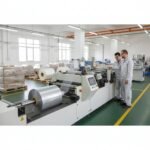
You have found several suppliers who list “non-woven fabric slitting machines” in their product range. The web widths and speeds look similar, and you are starting to compare prices. This is where a common and costly mistake happens.
A machine that slits paper or film perfectly can easily stretch, tear, or damage a roll of delicate non-woven material. The label “for non-wovens” means very little if the core systems are not configured for your specific fabric’s weight, softness, and elasticity. The first check is not on the machine’s spec sheet; it is on the supplier’s understanding of this risk.
When checking a non-woven fabric slitting machine, focus on four key areas beyond the basic price and width. Check the supplier’s proposed method for tension control to prevent material stretch, the unwinding and rewinding configuration to help with roll stability, their justification for the blade system to get clean edges, and the quality of the technical questions they ask about your specific material before they provide a quote.
From our side as a machine builder, the term “non-woven” is too broad to be useful. A 15 GSM spunbond for hygiene products behaves very differently from a 50 GSM spunlace for industrial wipes. A supplier who does not ask for these details before quoting is not preparing a solution; they are just selling a standard machine. The goal is to find a machine configured to protect your material’s integrity, not just one that matches a width requirement. Our Non Woven Slitting Machine is engineered specifically for these delicate materials.
What Weak Signals Suggest a Supplier May Not Understand Non-Wovens?
When you evaluate a supplier, their initial response is often more telling than their final quotation. A supplier who is not experienced with the specific demands of non-woven fabrics may reveal it through their communication.
- Quoting Based Only on Width: If a supplier gives you a price based only on “1.6m non-woven slitter” without asking for material type, GSM (grams per square meter), or elasticity, this is a major red flag. They are treating your material like a generic roll of paper.
- Emphasizing Maximum Speed: A high theoretical speed (e.g., 400 m/min) is an easy selling point, but it can be unusable for most non-wovens. Running a delicate, stretchy material too fast without advanced tension control may lead to web breaks and stretched, unusable product. A serious supplier will discuss the stable, practical production speed for your material.
- Offering a Low Price Without Explanation: A significantly lower price often comes from omitting key components. This could mean a simple friction brake instead of a proper tension control system, or a basic rewinder that will produce soft, “spongy” rolls.
If you see these signals, it is a good reason to slow down. The risk is not just a poor-quality machine; it is a machine that is fundamentally mismatched to your material, leading to chronic waste and production headaches.
How Can a Supplier’s Questions Reveal Their Expertise?
A supplier’s expertise is not in their product catalog; it is in the questions they ask. An experienced machine builder knows that the machine configuration depends entirely on the material’s properties.
A strong supplier will treat your inquiry like a technical consultation. They should ask questions like:
- “What is the exact type of non-woven? Is it spunbond, spunlace, meltblown, or something else?”
- “What is the material’s weight in GSM? What is the thickness range?”
- “Does your material have significant stretch? If so, in which direction?”
- “What is the parent roll diameter and weight? Are the rolls stable or soft?”
- “What is your desired finished roll density? Do they need to be hard and tight, or is a softer wind acceptable?”
- “Are you currently facing any slitting issues like edge dust, fraying, or telescoping rolls?”
These questions are not a formality. The answers directly influence the choice of tension system, unwinding method, blade type, and rewinding technology. A supplier who asks these questions is building a solution, not just quoting a model number.
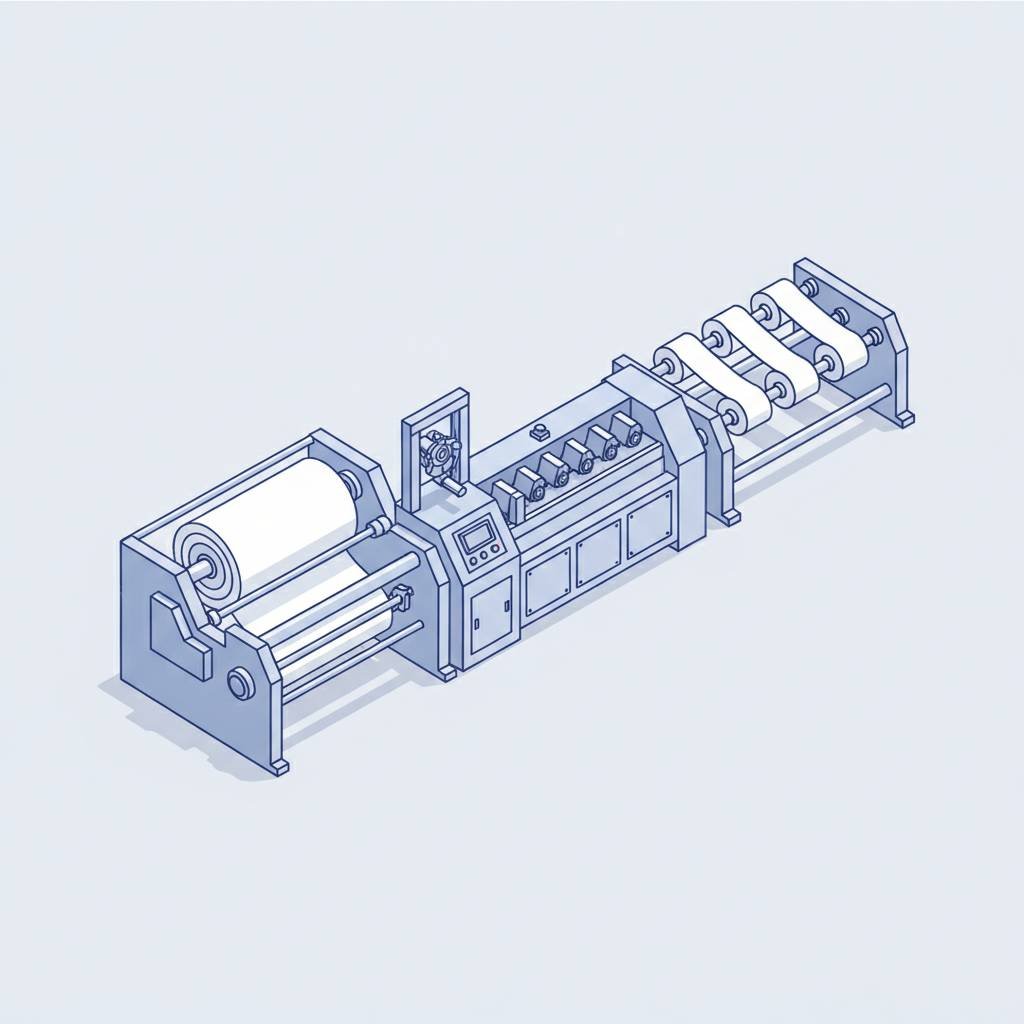
What Should You Confirm About the Tension Control System to Prevent Stretching?
Non-woven fabrics, especially lightweight ones, stretch easily and permanently. Incorrect tension is a primary cause of material waste. A vague specification like “automatic tension control” is not enough information.
You should confirm how the machine measures and adjusts tension. For most non-wovens, a closed-loop tension control system is often a more reliable choice. This system uses load cells (tension sensors) to continuously measure the actual web tension. It then automatically adjusts the unwinding brake or motor to keep the tension at a precise, constant setpoint.
A simpler, open-loop system (often using an ultrasonic sensor to measure roll diameter) is less precise. It estimates tension rather than measuring it directly, which can be a problem when a roll is not perfectly round or dense.
When you get a quotation, ask the supplier:
- Does the machine use a closed-loop system with load cells?
- What is the sensitivity of the tension control?
- How does the system handle the transition from a full parent roll to an empty core, where tension requirements change dramatically?
The small additional cost for a more precise tension system can be minor compared to the cost of material wasted from stretching.
Why Do Unwinding and Rewinding Methods Affect Roll Quality?
The way the parent roll is unwound and the finished rolls are rewound also has a major impact on the final product. For non-wovens, standard systems are often not good enough.
Unwinding Heavy or Soft Parent Rolls
If your parent rolls are large and heavy, a simple friction brake on the unwinder can cause problems. The high inertia can lead to web flutter or breaks during speed changes. For these situations, a driven unwinder (often called a surface-drive assist) can be a better solution. A motor helps turn the heavy roll, reducing the load on the web itself and providing much more stable tension.
Rewinding Soft, Air-Filled Materials
Many non-wovens are soft and contain a lot of air. Using a standard “center winding” method, where the rewind shafts are driven from their core, can result in loose, spongy rolls that are unstable and difficult to handle in downstream processes. These rolls can “telescope,” where the inner layers slide out.
For these materials, a center-surface rewinding system is often a useful configuration. This method drives the core while also using a contact roller to press against the outside of the finished roll. This combined action expels air and builds a dense, stable roll from the core outwards.
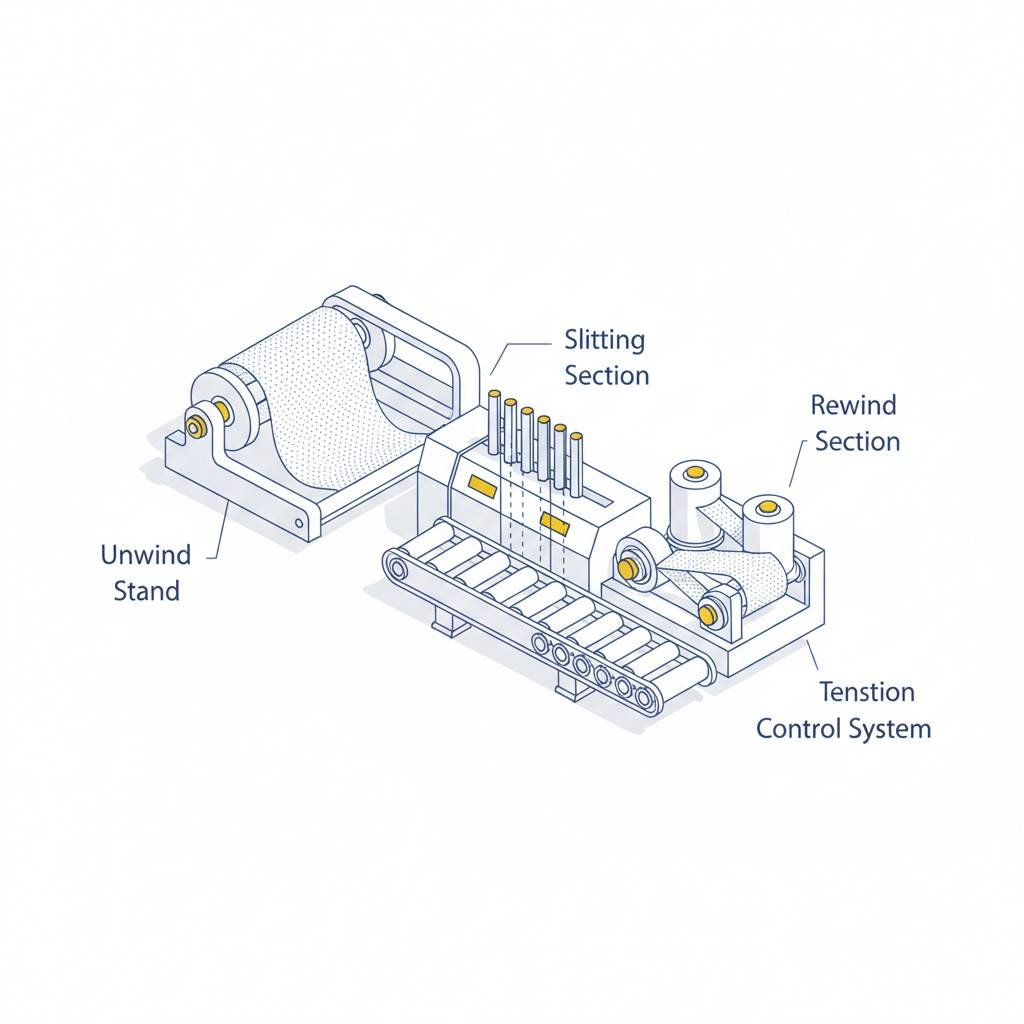
Before confirming an order, provide your parent roll weight and desired finished roll firmness. Ask the supplier to justify their proposed unwinding and rewinding configuration based on that data. Our Non Woven Slitting Machine can be customized to meet these exact requirements.
Supplier Evaluation Checklist for Non-Woven Slitters
Use this table to compare how different suppliers approach your inquiry. The “Strong Signal” column describes a supplier who is likely more experienced with non-woven materials.
| Buyer Checkpoint | Weak Supplier Signal (Potential Risk) | Strong Supplier Signal (Positive Indicator) |
|---|---|---|
| Initial Inquiry | Provides a price based only on web width. | Asks for material type (spunbond, etc.), GSM, and elasticity first. |
| Speed Discussion | Focuses on the machine’s maximum theoretical speed. | Discusses the stable, realistic speed for your material to maintain quality. |
| Tension Control | Vaguely mentions “automatic tension control.” | Explains the specific system (e.g., closed-loop with load cells) and why it’s needed. |
| Unwinding System | Quotes a standard brake without asking about roll weight. | Asks for parent roll weight/diameter to determine if a driven unwinder is needed. |
| Rewinding Method | Proposes a standard center-winder by default. | Asks about desired finished roll density to confirm if a center-surface winder is required. |
| Blade System | Recommends a blade type without seeing your material. | Asks for a physical material sample to test and justify the blade choice. |
How to Prepare for a Serious Quotation
To get a reliable and accurate proposal, you need to provide the right information upfront. Sending a vague inquiry will only get you a vague and potentially unsuitable offer. A serious supplier needs data to configure a machine that will work for you.
Before contacting suppliers, gather the following details:
- Material Type: Be specific (e.g., spunbond PP, spunlace PET/viscose).
- Material Weight/Thickness: Provide the range in GSM.
- Parent (Jumbo) Roll Specs: Maximum width, diameter, and weight.
- Finished (Slit) Roll Specs: Minimum and maximum required widths and the target finished diameter.
- Core Internal Diameter: The size of the paper or plastic cores you use.
- Desired Production Speed: Your realistic target in meters per minute.
- Current Problems: Mention any issues you have with your current slitting process, such as dust, stretching, or loose rolls.
Sending these details in your first email helps a good supplier understand your application and propose a machine that solves your specific challenges. It moves the conversation from price to performance, which is the foundation of a successful equipment purchase.