

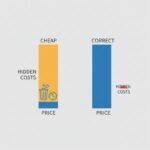
A low price on a used slitting machine looks tempting. But will it handle your material without creating massive waste? Understanding the hidden risks is critical before you commit.
The biggest risk with a used slitting machine is not that it will break, but that it won’t work with your specific material[1]. A new machine, however, is configured and guaranteed for your production needs, offering a lower-risk investment with predictable performance and full supplier support.
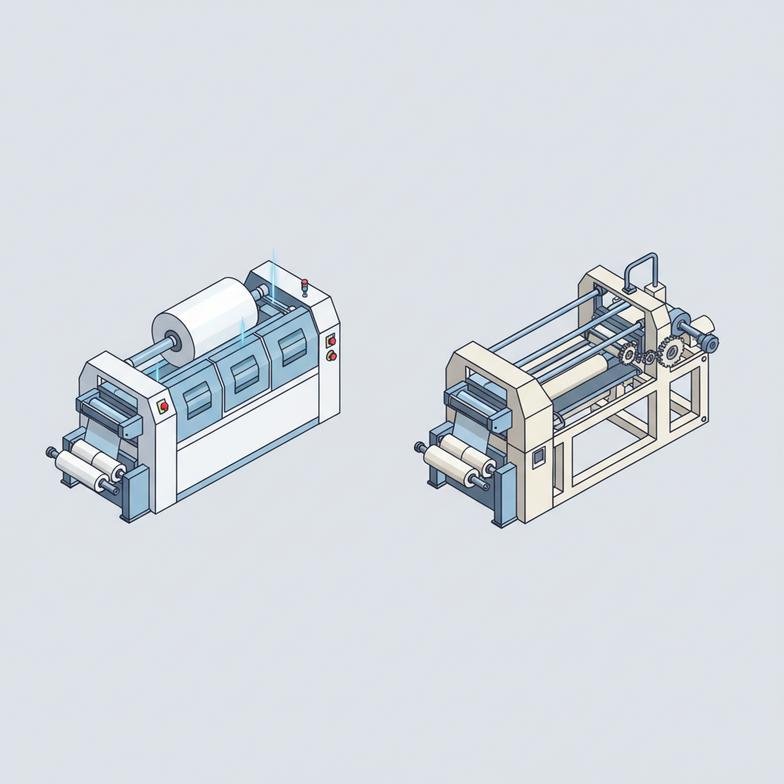
That upfront saving on a used machine can feel like a smart business move. I get it. I’ve spoken with many managers who found a machine online with the right width and a great price. But the conversation often shifts when we start digging into the details. To make a truly informed decision, you have to look past the price tag and evaluate what you are actually risking. Let’s break down those risks together, starting with the one that causes the most production headaches.
Will a Used Machine Actually Handle Your Specific Material?
You found a used machine with the perfect width. But it was built to slit thick paper, and you need to slit thin film. Know why this material mismatch is a deal-breaker.
A slitting machine is not a one-size-fits-all tool[2]. It is engineered for a specific material’s tension, thickness, and surface properties. Buying a machine configured for another material is the single biggest risk, often leading to wrinkles, uneven edges, and high waste[3].
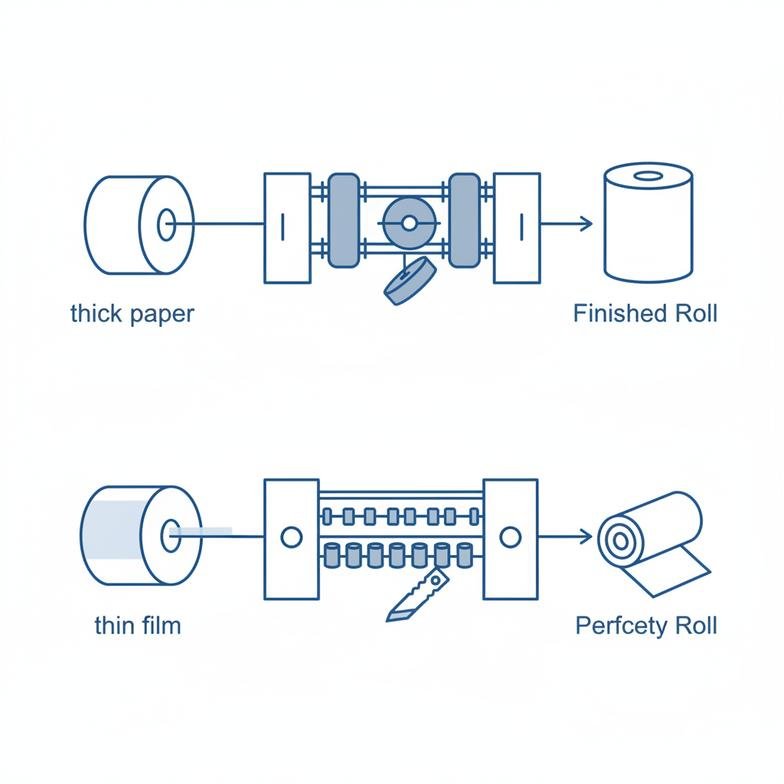
When I get an inquiry like, “I found a used 1600mm slitter, is it a good deal?” my first question is always, “What material was it running, and what material do you plan to run?” The answer tells me almost everything. A machine is a system of components all working together. The tension control, cutting method, and rewinding structure are all chosen based on the original material. If your material is different, the whole system can fail. For example, a machine designed for sturdy kraft paper will have a robust, less sensitive tension system. If you try to run delicate 12-micron PET film on it, that same tension system will stretch or snap the web[4]. You can’t just “turn down the tension.” The system isn’t designed for that level of precision.
Let’s look at how this plays out in practice.
| Feature | Requirement for Paper | Requirement for Film | The Risk of Mismatch |
|---|---|---|---|
| Tension Control | High, stable tension | Low, highly responsive tension | Film stretches or breaks; paper slips. |
| Cutting Method | Crush cut or heavy shear cut | Razor cut or light shear cut | Film melts or has burrs; paper creates dust.[5] |
| Rewinding Type | Surface or center-surface | Center rewinding | Film gets scratched; finished rolls are too tight/loose. |
A used machine locks you into its original configuration. Without a complete and costly overhaul, it will never perform well on a material it wasn’t built for. That initial saving disappears quickly in material waste and production frustration.
Is the Total Cost of a Used Slitter Really Lower?
The initial price of a used slitter is low. But what about the hidden costs for repairs, parts, and expensive downtime when it doesn’t work? You must calculate the real cost.
The purchase price is only a fraction of the total cost.[6] A used machine’s true cost includes inspection, refurbishment, sourcing obsolete parts[7], and the high financial impact of production downtime. These unpredictable expenses often make a used machine a more expensive gamble in the long run[8].
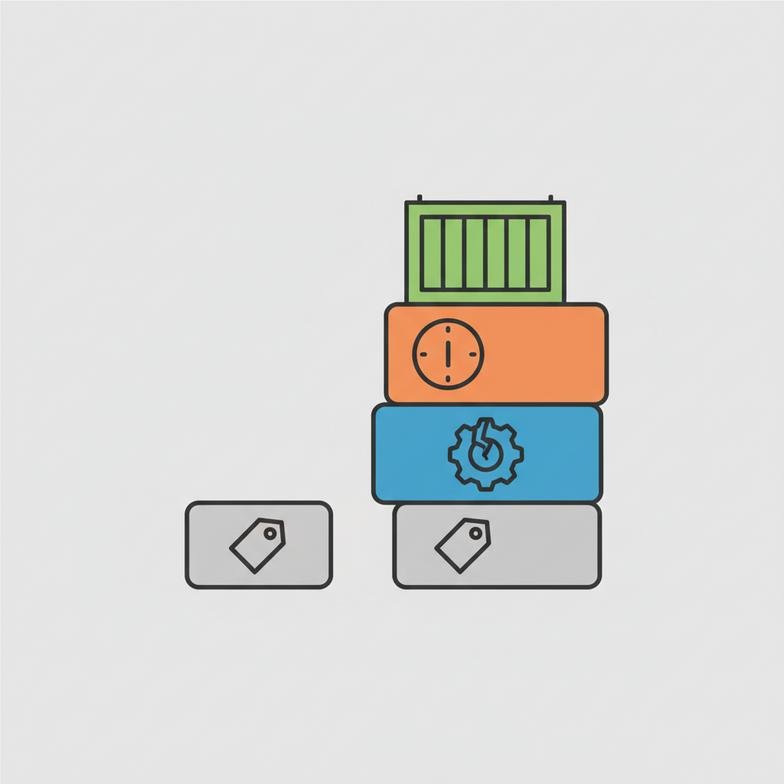
Many buyers focus only on the acquisition cost. But owning and operating a machine involves much more. With a used machine, you are buying a list of unknown expenses. First, you need to either hire an expert or use your own engineering team to inspect it, assuming you can even see it in person. This costs time and money. Then, you’ll likely find worn parts—bearings, rollers, blades, or even motors—that need replacement. Now you have to hunt for those parts, which could be outdated and hard to find. I once had a client who bought a used European machine and spent three months trying to find a specific electronic component, all while his production line stood still. The cost of that downtime was ten times the price of the part.
Here are the costs you must budget for beyond the sticker price:
- Inspection & Logistics: Travel costs for inspection, plus crating and shipping, which can be complex for heavy machinery.
- Refurbishment: The cost of replacing worn mechanical parts, degraded wiring, and outdated control system components.
- Installation & Commissioning: You are on your own. You have to pay technicians to install, align, and test the machine without any support from the original manufacturer.
- Downtime: This is the biggest hidden cost.[9] Every hour the machine is not running correctly is an hour of lost revenue. A new machine is designed to minimize this risk from day one.
When you add up these potential expenses, the seemingly cheap used machine often ends up costing far more than a new one.
Who Is Responsible When a Used Machine Doesn’t Work?
You need technical support after your purchase. With a used machine, there is no warranty, no training, and no one to call for help. You have to understand what that means.
With a used machine, you assume 100% of the risk[10]. There’s no warranty, no performance guarantee, and no after-sales support. A new machine includes a “responsibility package,” where the manufacturer is accountable for performance, training, and long-term service.
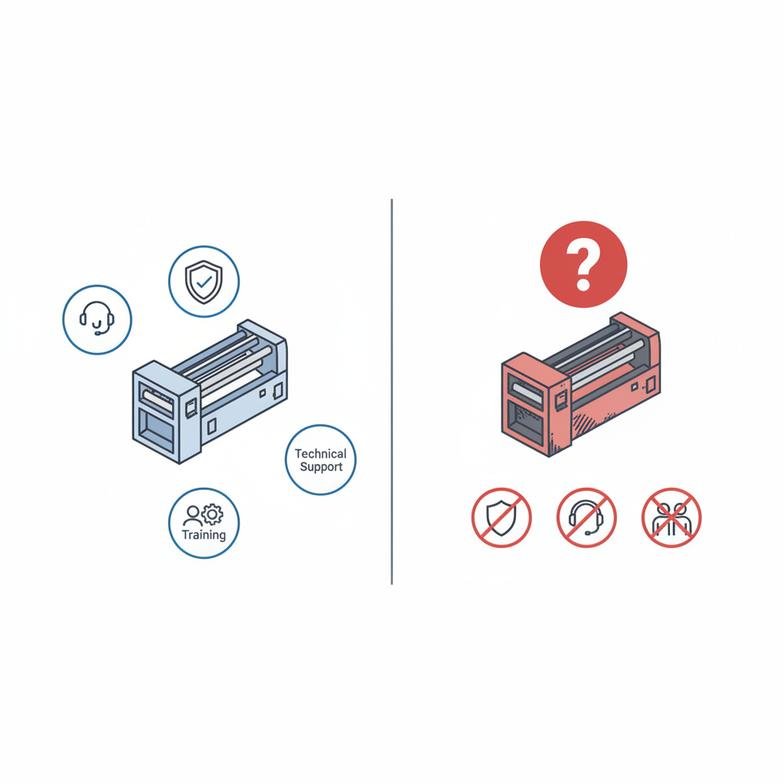
This is the most critical question to ask: “Do we have the in-house technical team to manage this machine without any supplier support?” For most companies, the honest answer is no. When you buy a new machine from a reputable supplier like us, you aren’t just buying steel and motors. You are buying a guarantee. We run tests with your exact material samples before the machine even ships. We ensure it meets the agreed-upon performance for speed, edge quality, and roll hardness. When the machine arrives, our technicians can help with installation and train your operators on how to run it efficiently and safely. If a part fails, you have a warranty. If you have a problem, you have a technical team to call.
Now, compare that to the used machine scenario.
- Warranty: None. The machine is sold “as is.” If it doesn’t work, it’s your problem.
- Performance: A gamble. You hope it works, but no one guarantees it will.
- Training: Your team has to learn through trial and error, which means more wasted material and potential safety risks[11].
- After-Sales Support: The seller is gone. If a critical PLC or drive fails, you may be searching for an obsolete part that no longer exists, potentially turning your machine into a giant paperweight[12].
This “responsibility package” is the true value of a new machine. It’s an insurance policy for your production and your investment. The supplier is your partner, and they are accountable for your success. With a used machine, you are on your own.
Conclusion
The choice isn’t about saving money upfront. It’s about managing risk. A new slitter offers predictable performance and full support, protecting your production and your investment from day one.
References
- 7 Common Problems with Slitting Machines in the Metals Industry↩
- The Basics of Web Handling Processes – Quad Plus↩
- [PDF] THE PREDICTION OF TROUGHS AND WRINKLES – BioResources↩
- What Is Web Tension Control in the Slitting and Winding Process↩
- TIP OF THE WEEK: Slitting Methods – Elite Cameron↩
- Total Cost of Ownership – Wikipedia↩
- 4 Reasons Component Obsolescence Is a Growing Part of Supply …↩
- [PDF] Life Cycle Cost Analysis Handbook: Cost Benefit Guide↩
- Manufacturing Downtime: Definition, Stats & More – TWI Institute↩
- Implied Warranty – Washington State | Office of the Attorney General↩
- [PDF] Training Requirements in OSHA Standards↩
- an information systems approach to reducing medical errors – PubMed↩