


You’ve received two quotations for a new slitter rewinder. One is significantly cheaper, but the other includes something called a "differential shaft." Before you assume the lower price is the better deal, you need to understand why choosing the machine without this shaft can be the most expensive mistake you make.
The decision isn’t about a premium upgrade or a luxury feature. For certain materials and slitting jobs, the cheaper machine with a standard air shaft is simply not fit for the purpose. It creates a high risk of producing defective, unsellable rolls, and the resulting material waste can quickly erase any initial savings.
The better question is not "Is a differential shaft worth the extra cost?" but rather, "Does my material and process demand it?"
You likely need a differential shaft in your slitter rewinder if your application involves materials with known thickness variations (gauge bands), you are slitting a parent roll into multiple narrow-width finished rolls, or your downstream process demands consistently wound rolls without defects like telescoping or uneven density. For these situations, it is less of an option and more of a core requirement for producing sellable quality.
Let’s walk through the practical reasons why this single component is so necessary for certain applications.
Why Does a Standard Air Shaft Cause Defects with Some Materials?
A standard air shaft is simple and effective for many jobs. It uses a single internal air bladder to apply uniform pressure, causing lugs or leaves to expand and grip the inside of every core on the shaft. This works perfectly under one condition: that the material being slit is perfectly uniform in thickness across its entire width.
In the real world, this is rarely the case.
Most materials—especially thin films, foils, coated papers, and nonwovens—have slight, unavoidable thickness variations called "gauge bands." While the average thickness of the roll might be correct, some sections are a few microns thicker or thinner than others.
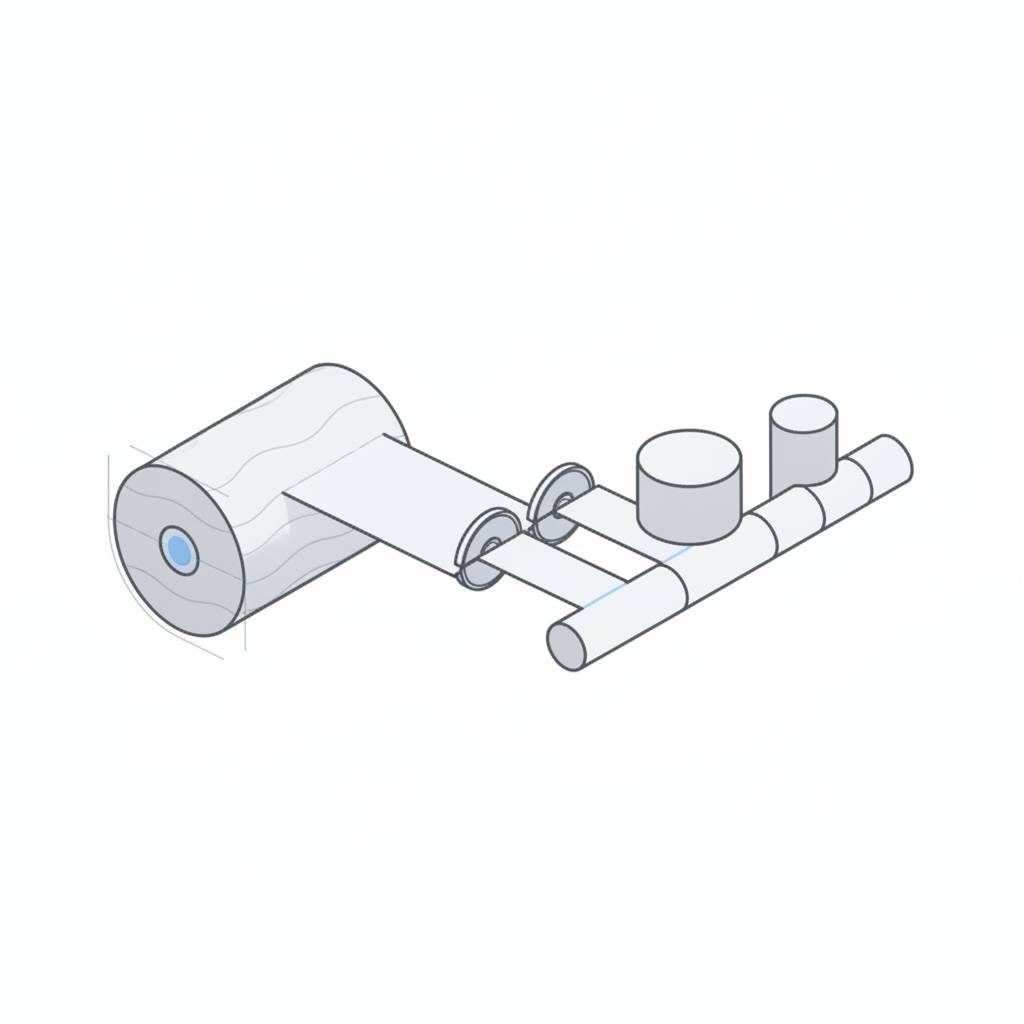
When you slit this material and rewind it onto a standard, single-pressure air shaft, the problems begin. The strips from thicker sections of the material build diameter faster than the strips from thinner sections. Since all the cores are locked to the same shaft rotating at the same speed, the larger-diameter rolls pull the material tighter and tighter, while the smaller-diameter rolls become progressively looser.
This creates a set of finished rolls with chaotic, inconsistent tension, leading directly to defects.
Key Signs Your Application Requires a Differential Shaft
So, how do you know if your process falls into the "must-have" category? Before you even compare quotations, look for these three key indicators. If your application meets one or more of these criteria, a discussion about a differential shaft is essential.
1. Your Material Has Inherent Variation or is Slippery This is a primary factor. If your material’s technical data sheet (TDS) specifies a thickness tolerance (e.g., 23 micron +/- 7%), it has a gauge band. Thin films like PET and BOPP, coated papers, laminated materials, and aluminum foils are classic examples. Slippery or low-friction materials are also prime candidates, as they are more prone to layer-shifting (telescoping) when tension is not perfectly uniform.
2. You Slit into Multiple Narrow Rolls The more finished rolls you slit from a single parent roll, the more you multiply the effect of gauge variation. Slitting into two or three wide rolls might not cause a major issue. But slitting into 10, 20, or more narrow rolls makes it very likely that you will have a mix of loose and tight rolls on a standard shaft.
3. Your Finished Roll Quality Standard is High If your rolls go directly to a customer or to a sensitive downstream process like high-speed printing or automated packaging, roll consistency is not negotiable. Defects caused by poor tension control can lead to web breaks, registration errors, and other costly failures on your customer’s equipment. For sensitive applications like medical, electronics, or high-end packaging, the roll consistency from a differential shaft is often considered essential to meet quality expectations.
What Roll Quality Problems Does a Differential Shaft Help Prevent?
A differential shaft solves the core problem by allowing each individual roll to slip as needed. It uses friction rings or similar mechanisms that let each roll regulate its own speed and tension, independent of its neighbors on the same shaft. This helps to keep every roll—whether on a thick or thin section of the material—wound to the correct, consistent tension.
This design helps prevent common, costly defects:
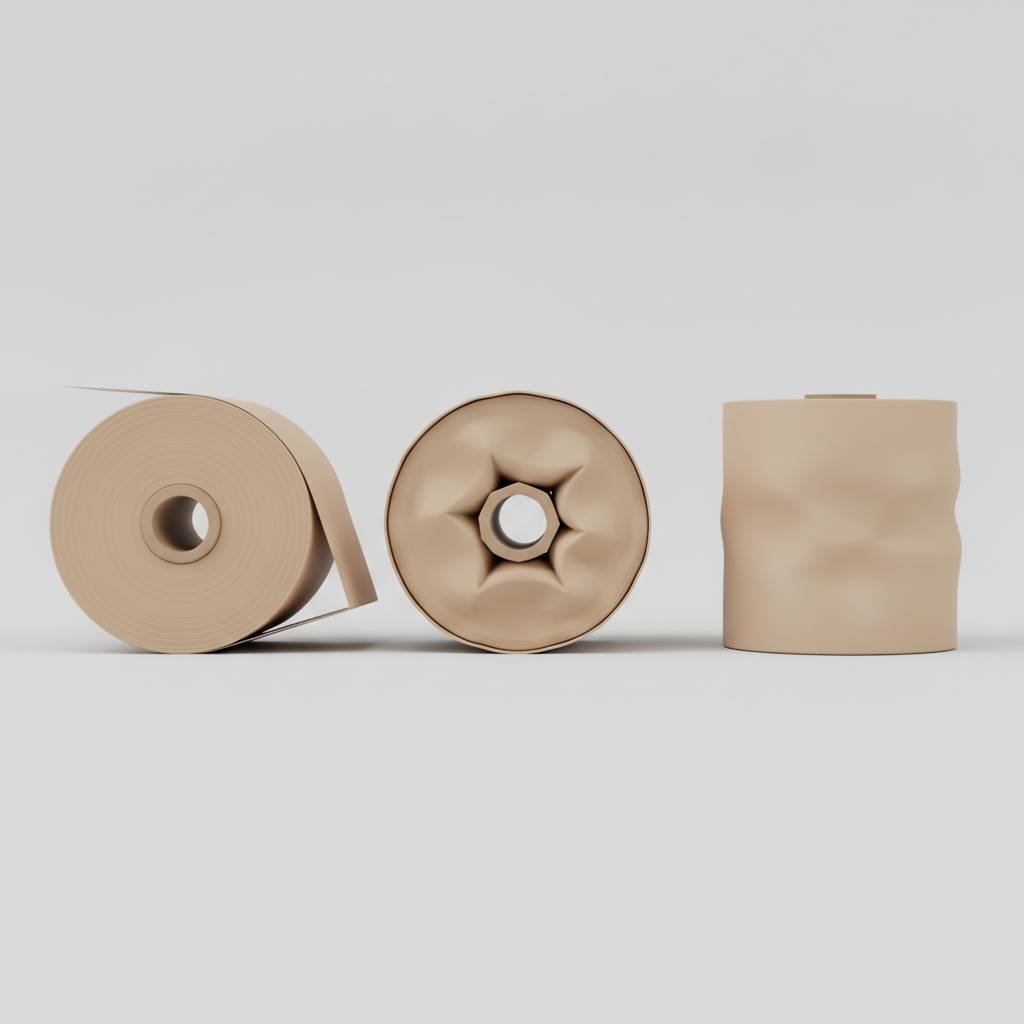
- Telescoping: Loose rolls where the layers shift sideways, creating a cone-like appearance. These rolls are unstable and often unusable.
- Starring / Core Collapse: Overly tight rolls where tension is so high it deforms or crushes the core.
- Uneven Density: A mix of "hard" (tight) and "soft" (loose) rolls on the same rewind set, leading to unpredictable performance in subsequent processes.
- Wrinkles & Stretching: Inconsistent tension can pull and deform sensitive materials, permanently damaging them.
By addressing these root causes, a differential shaft contributes to a much higher yield of sellable, first-quality rolls, helping to reduce material waste and improve overall production efficiency.
Checklist: How to Confirm if You Need a Differential Shaft
Asking a supplier for a quotation without providing the right details can lead to a machine that isn’t right for your job. The most reliable way to specify your slitter rewinder is to come to the conversation prepared.
A quotation that doesn’t ask for most of this information is a reason to be cautious. Use this checklist to gather the data an experienced supplier needs to give you a reliable recommendation.
| Buyer Check | What It Confirms for the Supplier |
|---|---|
| Material Type & Grade<br>(e.g., 12-micron PET Film, 80gsm Coated Paper) | The material’s general behavior (stretchy, stiff, slippery). |
| Material Thickness & Tolerance<br>(e.g., 23 micron +/- 5%). Check your material’s Technical Data Sheet. | The presence and size of the gauge band—a key factor in the decision. |
| Proposed Slitting Widths<br>(List common combinations, e.g., 10 rolls @ 50mm) | The risk level. More narrow rolls increase the need for differential tension control. |
| Finished Roll Quality Standard<br>(e.g., "Must be stable for high-speed printing, no telescoping") | The tolerance for defects. High standards often make a differential shaft non-negotiable. |
| History of Roll Defects<br>(e.g., "Current machine gives us a mix of loose and tight rolls") | Confirms that you are already experiencing the exact problem a differential shaft is designed to solve. |
| Sample Material Available?<br>(Can you send a sample of your most challenging material?) | Allows the supplier to perform tests or analysis to provide a definitive recommendation. |
Preparing for Your Inquiry
Before you request a final quotation, take a moment to prepare. Use the checklist above to gather the following information:
- Your material type, thickness, and thickness tolerance (from the TDS).
- Your most common slitting patterns (combinations of widths).
- Your finished roll quality requirements and a description of any unacceptable defects.
Sending these details with your inquiry allows us to provide a more accurate and reliable configuration recommendation. It helps the machine you invest in to be properly matched to the job you need it to do, preventing the costly mistake of specifying a machine that can’t deliver the quality you require.