

An overseas buyer’s search for a slitting machine often starts with one simple question: "What is your price for a 1300mm machine?" It feels like a logical first step. You know the width you need, and you want to compare prices.
The problem is, this question often leads to a flood of quotations that are impossible to compare reliably. One price is 20% lower than another, but the specifications look similar on the surface. Choosing the cheaper option feels risky, but overpaying feels inefficient. You are left trying to compare prices, but you are actually comparing hidden risks.
The better starting point isn’t the machine’s width, but the material you plan to run on it. A machine configured for heavy kraft paper will damage thin film, and a film slitter will struggle with paperboard. A good manufacturer knows this, and their first priority is to understand your application, not just to give you a price.
When checking a China slitting machine manufacturer, overseas buyers should focus on four key areas: 1) the technical questions the supplier asks about your material and process, 2) the level of detail in their quotation, including component brands and configuration logic, 3) their process for confirming performance, such as a test run using your material samples, and 4) the clarity of their after-sales support and spare parts plan. Suppliers who excel in these areas tend to be more reliable partners for a long-term capital investment.
Why Your First Question Might Be Leading You to the Wrong Supplier
When you ask for a price based only on machine width, you invite suppliers to compete on a single, often misleading, variable. A supplier can easily offer a low price by quoting a generic machine with the simplest configuration. This machine might technically be 1300mm wide, but it may lack the specific systems needed for your material.
Consider the difference:
- Slitting 200gsm Kraft Paper: This requires a robust frame, high-quality shear blades to handle dust and thickness, and a strong unwinding system for heavy parent rolls.
- Slitting 12-micron PET Film: This requires a highly sensitive tension control system to prevent stretching, static elimination bars, and precision razor blades to get a clean cut without wrinkles.
A supplier who gives you an instant price without asking about your material is not providing good service; they are guessing. A good supplier’s first response should be a list of questions. This slower, more detailed inquiry process is not a sign of inefficiency-it is the first sign of competence.
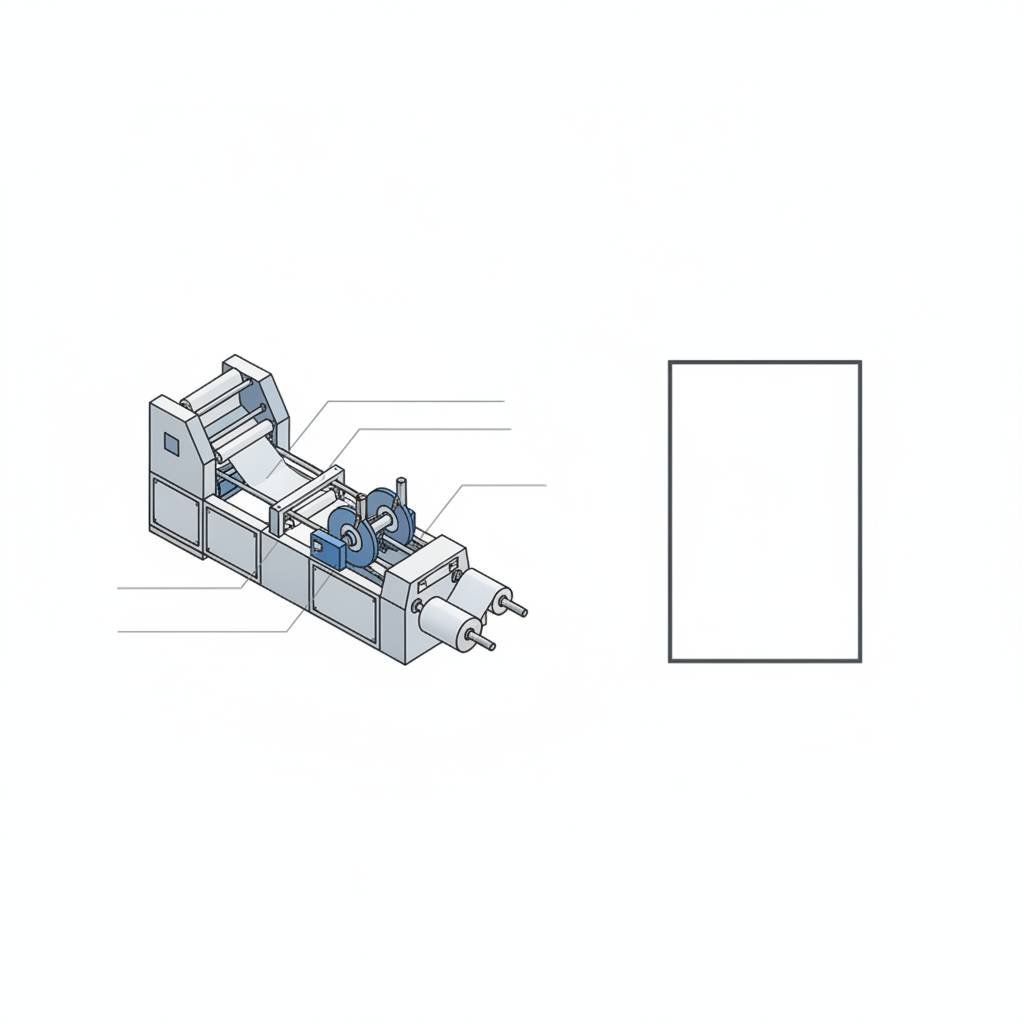
Red Flags vs. Green Flags: Evaluating a Supplier’s First Response
The initial communication with a potential supplier is one of the most useful data points you can collect. A supplier who is just trying to sell a machine behaves very differently from one who is trying to engineer a solution. You can learn to spot the difference by paying attention to their first response.
The most diligent suppliers are often the ones who make the initial inquiry process feel slower and more thorough. They ask for details because they know those details determine the success of the project. Use the following table to score potential partners.
Table: Weak vs. Strong Supplier Signals When Vetting a Manufacturer
| Area of Evaluation | Weak Supplier Signal (Potential Risk) | Strong Supplier Signal (Indicates Diligence) | What to Ask |
|---|---|---|---|
| Initial Response | Provides an instant price based on width alone. | Asks for material type, thickness, roll diameters, and slit width. | "Based on my material, what configuration do you recommend and why?" |
| Technical Discussion | Says "no problem" to every request without explanation. | Explains how they will achieve a requirement (e.g., which tension system for your film). | "Can you explain the technical reason you chose that specific blade system for my application?" |
| Quotation Detail | Vague terms like "high-quality motor." | Specifies component brands (e.g., Siemens PLC, Yaskawa servo) and system type. | "Could you please provide a list of the major component brands and models?" |
| Performance Proof | Only shows generic videos of an ideal material. | Welcomes your material samples for a test run and provides a detailed report/video. | "Can I send you my material for a test run? What is your process for this?" |
| After-Sales Support | Vague warranty terms and no clear spare parts plan. | Provides a detailed warranty scope and a priced list of common wear parts. | "What is your process for remote troubleshooting and shipping spare parts after the warranty?" |
From Promises to Proof: What Evidence Should You Demand?
A supplier’s website and videos will always show a machine running perfectly with an ideal material. This is not proof that it will work for your application. To move from promises to proof, you need to demand concrete evidence.
One of the most effective ways to reduce risk is to request a material sample test run.
- What to do: Prepare and send a representative sample of your most challenging material to the potential supplier. This should be a small roll, not just a sheet, so they can perform a real test.
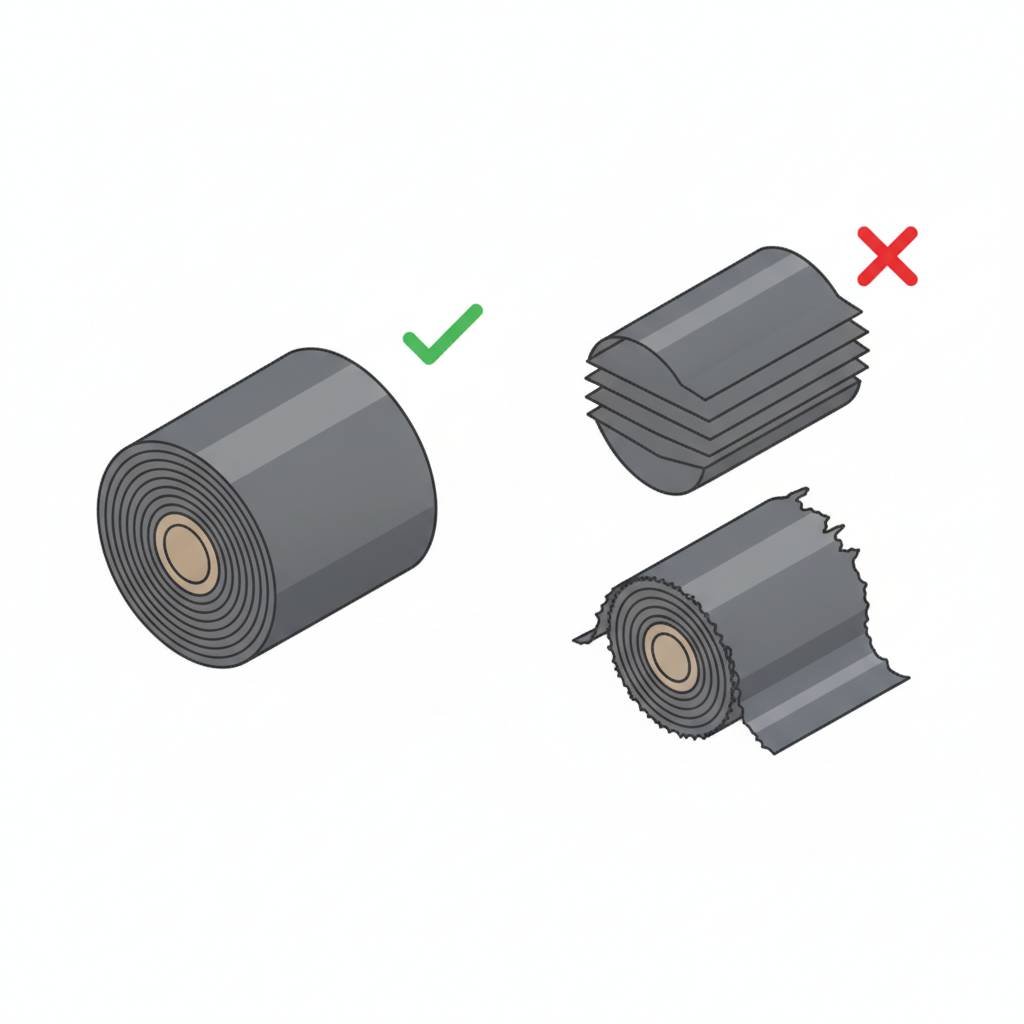
- What it checks: This verifies if the supplier’s proposed machine can handle your specific material without causing defects like wrinkles, telescoping, inconsistent edges, or dust. It also tests the supplier’s transparency and technical process.
- What to ask for: Request a detailed video of the test. It should show the raw material being loaded, the machine running at your target speed, and close-up, well-lit shots of the finished slit rolls and their edges.
If sending material is not practical, ask for a live video call where the supplier walks you through a machine running a material as close to yours as possible.
Beyond material tests, also ask for:
- Machine Layout Drawings: A good supplier can provide a drawing showing the machine’s dimensions and footprint. This helps with planning your workshop space.
- Electrical Diagrams and Component Lists: This confirms the electrical specifications and the brands of key components, which is important for maintenance.
A Practical Guide to Comparing Quotations (Beyond the Final Price)
Once you have quotations, resist the urge to look at the final price first. The real value is in the details. A cheap quote is often an empty one. Use a spreadsheet to compare offers line-by-line.
Here is what to check for inside the quotation:
- Tension Control System: Is it just "automatic tension control," or is it specified? For sensitive materials, a quotation that lists a "servo motor-driven closed-loop tension control system" is much more valuable than one with a simpler "magnetic powder brake." The price difference reflects a significant difference in performance.
- Key Components: Are the brands of the PLC, servo motors, inverter, and sensors listed? A supplier who is transparent about using recognized brands (e.g., Siemens, Yaskawa, Mitsubishi) is showing confidence in their build quality. Vague terms like "high-quality domestic brand" are a red flag.
- Blade System: Does the quote specify razor blades, shear-cut blades (male/female), or score-cut? Does it explain why that choice is right for your material?
- Certifications (e.g., CE Mark): If a supplier claims CE certification, ask for the Declaration of Conformity. Check which specific safety directives it was tested against. A generic certificate may not cover all of your local factory regulations.
- Spare Parts: Is there a clear list of included spare parts (e.g., 10 extra blades, 1 set of spacers)? Is there a separate, priced list of recommended wear parts for future orders?
- Export Packing: Does the quote detail the packing method? For sea freight, you should look for confirmation of vacuum-sealing, moisture protection, and a sturdy wooden crate suitable for international shipping. Poor packing can lead to a damaged or corroded machine.
- After-Sales Support: What are the exact terms of the warranty? What is the process for remote troubleshooting and getting parts after the warranty expires?
The price difference between two quotes is often found in these details. The cheaper machine may be saving money by using a less precise tension system or lower-grade components, which can cost you far more in material waste and downtime over the machine’s life.
What to Prepare Before You Contact a Slitting Machine Manufacturer
To get a serious, detailed response from a manufacturer, you need to show that you are a serious buyer. Vague inquiries get vague answers. Detailed inquiries get technical solutions.
Before you request a quotation, prepare a short technical brief. This will immediately elevate your conversation from a price hunt to a technical consultation.
Your brief should include:
- Material(s): Type (e.g., PET film, kraft paper, aluminum foil), thickness range (microns or gsm).
- Parent Roll Specs: Maximum width and diameter, core inner diameter, max weight.
- Finished Roll Specs: Desired slit widths (min/max), max finished roll diameter, core inner diameter.
- Production Needs: Target production speed and any required automation (e.g., roll unloading).
- Quality Issues: Any current problems you face with slitting (e.g., dust, wrinkles, telescoping rolls). Photos of defects are very helpful.
Sending this information upfront helps a good supplier recommend the right configuration and provides a solid basis for a reliable quotation. It is an important first step in finding a reliable manufacturing partner.