

You see it happening on the rewind roll: a series of small ridges or diagonal lines that confirm the entire roll you just slit is wrinkled. Now you face the choice of scrapping the roll and trying again. But what do you adjust?
The first instinct for many operators is to increase the tension, assuming that pulling the material tighter will smooth out the slack. But for many materials, especially stretchy films, that simple adjustment can be the very thing that makes the problem worse, permanently deforming the web and creating new, unfixable wrinkles.
Before you touch any dials, it’s better to treat the wrinkle as a clue. The shape, location, and pattern of the wrinkle are the most important pieces of information you have. They point directly to the root cause, which is rarely a major machine failure.
To fix web wrinkles during slitting, first identify the wrinkle’s specific pattern and location on the web. Most issues stem from one of three areas: incorrect tension for the material, misalignment of rollers in the web path, or inconsistencies within the parent material roll itself. A systematic check is more effective than random adjustments.
By learning to read the signs and checking the most likely causes in a logical order, you can solve most wrinkle problems quickly, reduce waste, and get your production back on track.
What Does the Wrinkle’s Shape and Location Tell You?
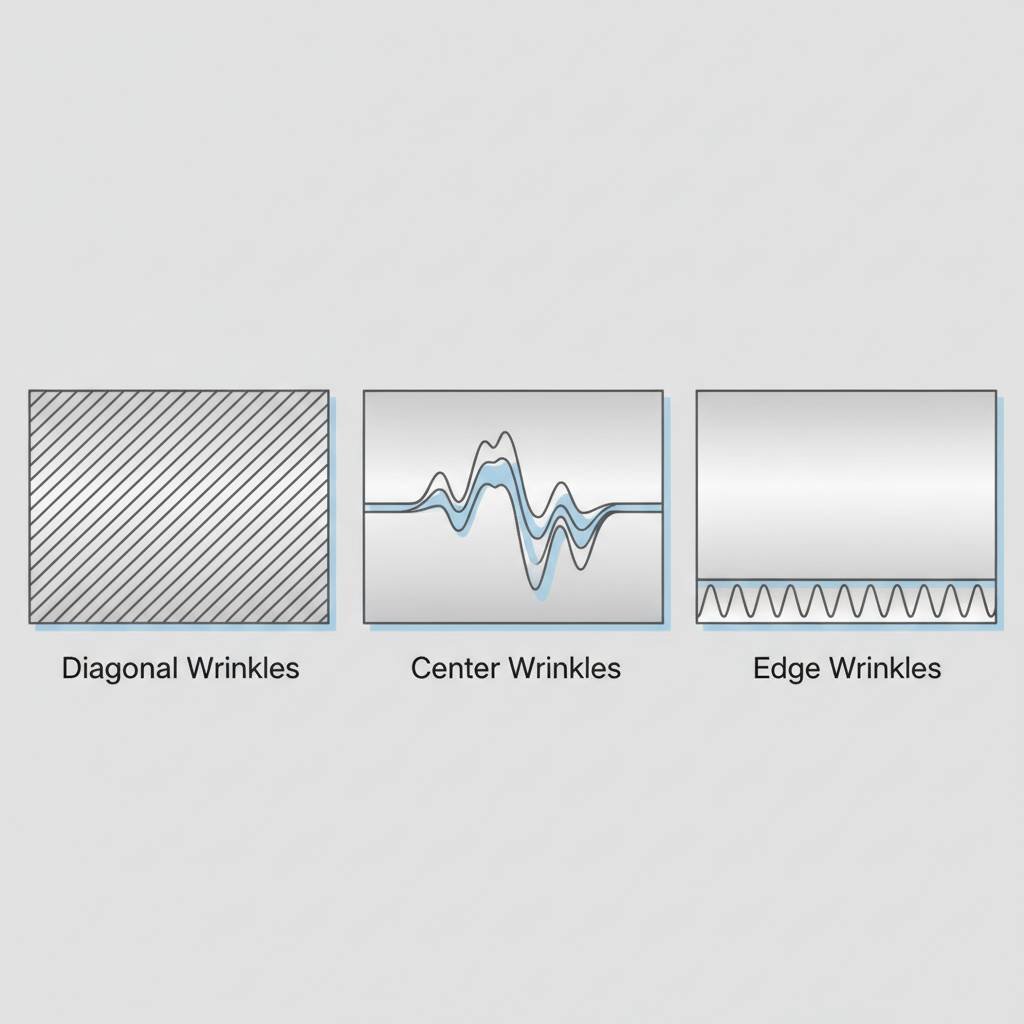
Not all wrinkles are the same. Before making any adjustments, take a moment to observe the defect. Where does it appear, and what does it look like? This simple diagnosis is the fastest way to narrow down the potential causes.
- Consistent Diagonal Wrinkles: If you see wrinkles running at a consistent angle across the entire web, it almost always points to an alignment issue. The web path is longer on one side than the other, creating uneven stress. This is often caused by the parent roll being loaded crookedly or a specific idler roller being out of parallel.
- Wrinkles in the Center of the Web: This pattern is a classic sign of incorrect tension, especially with elastic materials like PE or BOPP film. If the tension is too high, it can stretch the center of the web more than the edges, causing it to buckle. It can also be caused by a spreader roller that is bowed too much for the material.
- Wrinkles on One Edge: When wrinkles appear only along the left or right side of the web, it suggests an uneven tension profile. This could be caused by debris or adhesive buildup on a roller on that side, or it could be a defect in the parent roll itself, known as a "baggy edge."
- Random, Soft Wrinkles on the Finished Roll: If the web looks fine during slitting but the finished rolls are soft and have "star-shaped" or random wrinkles, the cause is likely trapped air. This happens when the rewinding layers are not wound tightly enough against each other.
The 3-Step Check: Is It the Material, the Setup, or the Machine?
When a slitter that was running well suddenly starts producing wrinkles, the problem is rarely a broken part. More often, the issue is related to the material or the job setup. By checking these things first, you can avoid unnecessary mechanical adjustments.
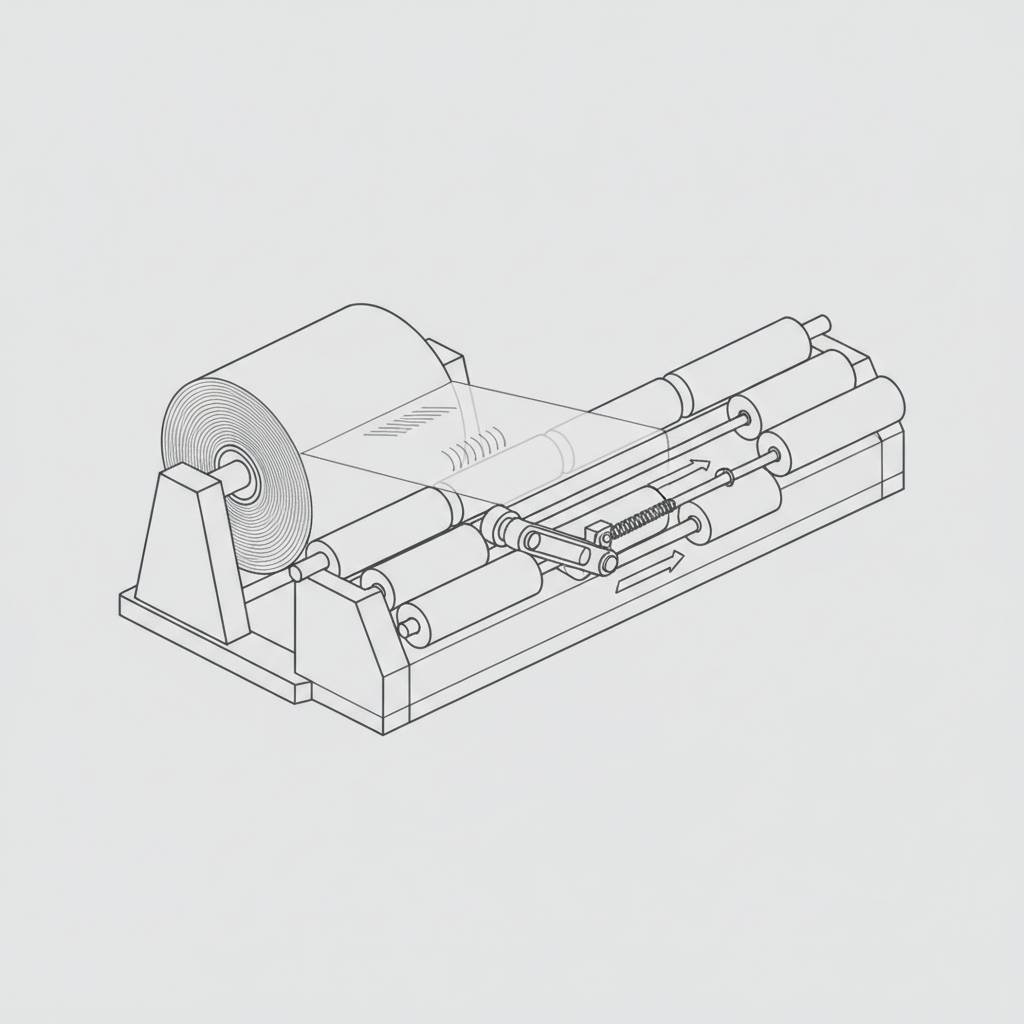
1. Check the Material: A slitting machine can only work with the material it’s given. Before you blame the machine, inspect the parent roll. Is it wound evenly? Are there any visible baggy areas or defects? A poorly wound parent roll will cause problems no matter how perfectly the slitter is tuned. 2. Check the Setup: This is where most issues are found. Was the parent roll loaded squarely? Is the web threaded correctly through all the rollers? A simple check with a tape measure can solve most diagonal wrinkle problems. After loading the roll, measure the distance from the material edge to a fixed point on the machine’s frame on both the left and right sides. If the numbers don’t match, the roll is crooked. 3. Check the Machine: If the material and setup are confirmed to be correct, you can then look at the machine itself. Check all idler rollers in the web path for cleanliness. A small spot of built-up adhesive or paper dust can distort the web. Also, check that rollers spin freely and haven’t seized.
A Troubleshooting Checklist for Common Wrinkle Problems
Use this checklist as a practical guide on the factory floor. It connects the wrinkle pattern you see to the most likely cause and the first, non-destructive action you should take. This systematic approach is faster and safer than making random adjustments.
Troubleshooting Checklist: Matching Wrinkle Patterns to First Actions
| Wrinkle Pattern (The Symptom) | Most Likely Cause | What to Check First (The Action) |
|---|---|---|
| Consistent diagonal wrinkles across the web | Parent roll not loaded squarely OR a specific roller is misaligned. | Use a tape measure to confirm the web-to-frame distance is equal on both sides of the unwind stand. Check roller alignment in the area just before wrinkles appear. |
| Wrinkles appearing only in the center of the web | Excessive tension is stretching the material OR a bowed roller is over-correcting. | Gradually reduce the main web tension. If a bowed roller is used, check and reduce its bow angle. |
| Wrinkles appearing only on one edge | Uneven tension from side to side OR a "baggy edge" in the parent roll. | Check for debris on rollers on that side. Check the parent roll for visible defects on the edge before it enters the machine. |
| Random, soft, or "star" wrinkles on the finished rewind roll | Air is being trapped between layers during rewinding. | Check that the lay-on (contact) roller is applying sufficient pressure. Confirm rewind tension is not too low for the material. |
For many stiff materials like paper, basic tension control is often enough. But for sensitive films, nonwovens, or foils, the ability to precisely control tension becomes a key factor in getting good results. Machines with closed-loop tension control and features like spreader rollers are not just a higher investment; they are built to handle these exact challenges, helping to reduce waste and allow for higher, more consistent production speeds.
What Information Helps a Supplier Solve Your Wrinkle Problem Faster?
If you’ve run through these checks and are still facing issues, the next step is to contact your machine supplier. Preparing the right information beforehand will help their technicians diagnose the problem much faster, often without needing a costly service visit.
Before you call or email, try to have this information ready:
1. Clear photos or a short video of the wrinkles, showing their shape and location on the web. A picture showing the wrinkle and the finished roll is extremely helpful. 2. The material specifications: Include the material type (e.g., BOPP, PET, Kraft Paper), thickness (in microns or gsm), and the parent roll width. 3. Your current machine settings: Note the running speed and the tension values for the unwind, in-feed, and rewind sections if they are displayed on your control panel.
With this information, a technician has a much clearer picture of the situation. They can often identify the likely cause remotely and guide you to the right adjustment over the phone, saving you hours of downtime. If you need help diagnosing a wrinkle issue or want to discuss a machine configuration suitable for your materials, send your details to our team for a review.