


A request for a “1600mm slitter rewinder” seems specific, but for a machine supplier, it’s dangerously vague. Whether that machine is for 40 gsm thermal paper or 40-micron PET film changes everything about the design, from the tension control system to the type of blades used.
This initial vagueness is a common reason for a disappointing investment. Buyers compare quotations that look similar on the surface but hide major differences in configuration. The result can be a machine that runs at half its advertised speed to prevent wrinkles, produces rolls with poor edge quality, or struggles with web breaks and material waste.
Choosing the right slitter rewinder involves matching the machine’s configuration to your material’s specific properties, not just its name. A suitable choice depends on a clear understanding of your material’s thickness and behavior (like stretch or dust), the required finished roll quality (like hardness and edge condition), and how these factors influence the design of the tension control, slitting section, and rewinding system.
A supplier’s first job should be to help you build a proper specification before providing a serious quotation. A machine’s success is determined in these early details. The goal is to move from a generic request to a clear technical requirement that helps you get the machine you actually need.
Why is asking for a “1600mm paper slitter” not enough detail?
This question is a good starting point, but it leaves out the most important information. The term “paper” can describe anything from thin, dusty 40 gsm kraft paper to rigid 400 gsm paperboard. These two materials behave completely differently and require different machine designs.
A machine built for heavy paperboard needs a rigid frame and powerful motors. If you try to run thin paper on it, the tension system may be too crude, causing the web to tear. Conversely, a machine designed for lightweight paper will lack the frame strength and torque to handle heavy board, leading to vibration and poor performance.
The same logic applies to films. “PET film” is not one material. A 12-micron film is highly sensitive to tension and static, while a 100-micron film is much more stable.
- For thin, dusty paper: I would ask about dust extraction systems and blade materials that resist wear.
- For heavy paperboard: I would confirm the required motor power and frame rigidity.
- For stretchy film: I would check if the design includes spreader rollers to prevent wrinkles.
- For thin foil: I would focus on the blade system to avoid burrs and edge damage.
Without these details, any quotation is just a guess.
How do my material’s properties affect machine configuration choices?
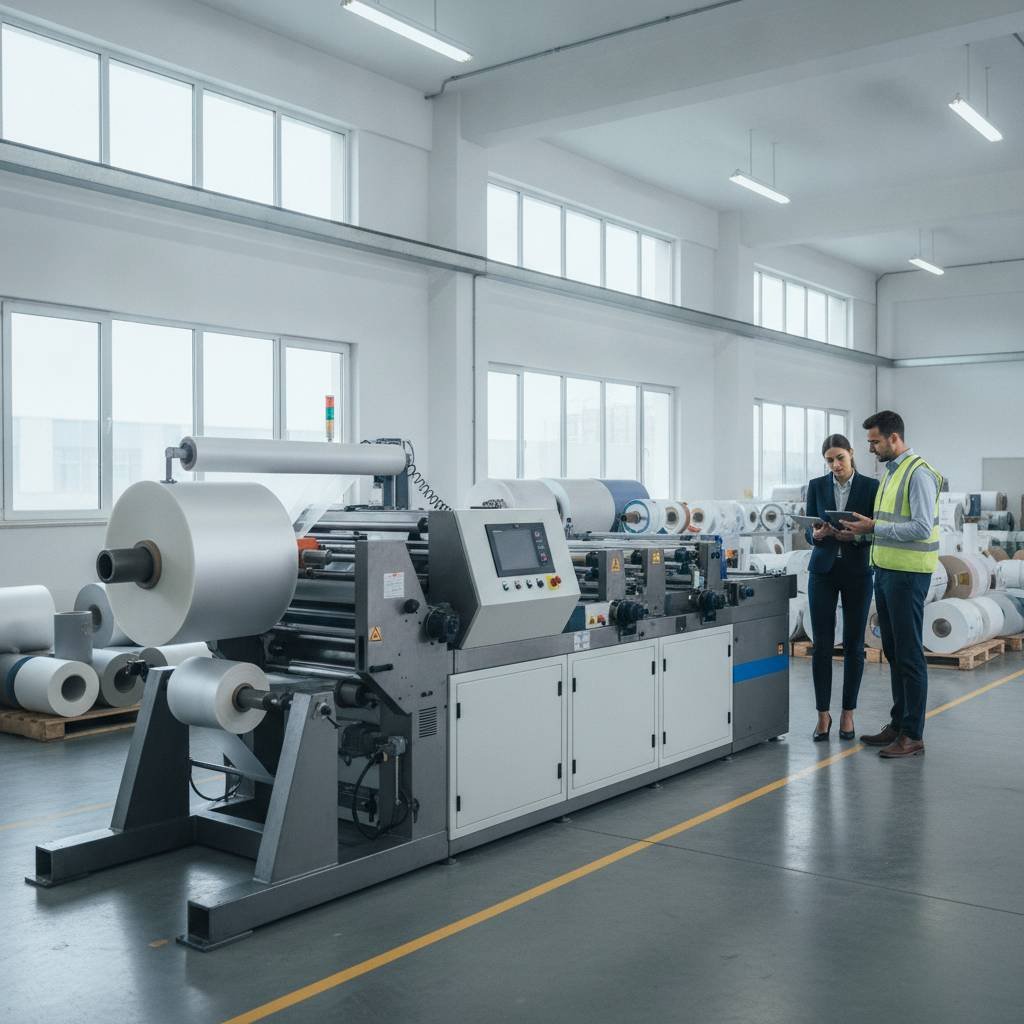
Every material has unique behaviors that a slitter rewinder must be configured to manage. Ignoring these properties is a common cause of slitting defects. Before looking at machine models, I would analyze the material itself.
Stretch (e.g., LLDPE film, spunlace nonwoven): Stretchy materials can easily deform under tension, leading to wrinkles and inconsistent slit widths. A suitable machine needs a sensitive, low-tension control system and may require driven unwind rollers or special spreader rollers to keep the web flat and stable.
Dust/Debris (e.g., kraft paper, some nonwovens): Paper dust can contaminate finished rolls and cause rapid wear on blades and bearings. For these materials, a dust extraction system located near the slitting section is a practical consideration.
Static (e.g., BOPP, PET film): Thin films generate significant static electricity at high speeds. This can cause the material to cling to rollers, attract dust, and make rewinding difficult. Integrated static elimination bars are a common solution.
Abrasiveness (e.g., aluminum foil, metallized films): Abrasive materials can wear out standard steel blades quickly, resulting in poor edge quality and burrs. This often requires a shear slitting system with harder, more durable circular knives (like D2 or tungsten carbide) instead of simple razor blades.
When you send an inquiry, mentioning these known behaviors helps a supplier recommend a configuration that solves problems instead of creating new ones.
What tension, slitting, and rewinding options should I match to my material?
A slitter rewinder has three core functional zones. The success of the entire machine depends on getting the configuration of these three zones right for your material.
1. Unwinding & Tension Control: This system feeds the parent roll into the machine at a consistent tension. A basic brake system might work for stable, heavy materials. However, for sensitive films or nonwovens, an automatic closed-loop tension control system with load cells is often a better choice. It continuously measures and adjusts tension, compensating for out-of-round rolls or other imperfections.
2. Slitting Section: This is where the material is cut.
- Razor Slitting: Often used for clean cuts on many thin films and non-adhesives. It is simpler and lower cost but not suitable for abrasive or very thick materials.
- Shear Slitting (Circular Knives): Uses a top and bottom knife to create a scissor-like cut. This method produces a clean, burr-free edge and generally provides good results on paper, foil, laminates, and thicker materials. It offers more control over edge quality but is a more complex system.
3. Rewinding Section: This is where the slit material is wound onto new cores.
- Surface Winding: The rewind rolls are driven by contact with a large drum. This produces dense, hard rolls and is common for paper and paperboard.
- Center Winding: The rewind shafts themselves are driven. This gives better tension control for each individual slit roll, which is important for sensitive or slippery materials. Using differential shafts allows each roll to slip slightly, accommodating minor variations in material thickness.
When you review a quotation, check which system is proposed for each zone and ask the supplier to explain why it was chosen for your material.
How do I define “good quality” for my finished rolls?
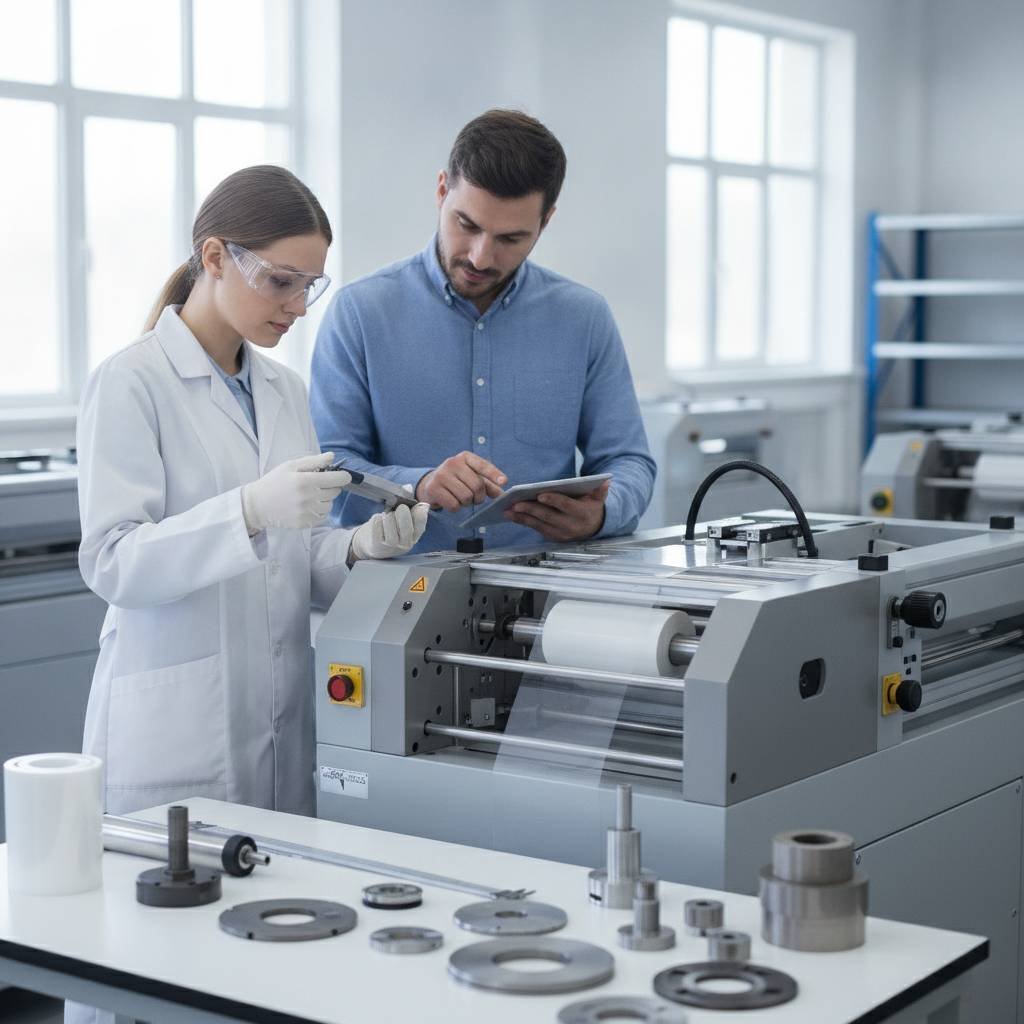
Every buyer wants “good quality” rolls, but this term is too vague for a machine specification. You need to define what “good” means for your next process or your customer.
- Roll Hardness: Are the rolls for a high-speed packaging line that requires very dense, stable rolls? Or are they for a delicate material that needs to be wound with less pressure to avoid stretching? This determines the choice between surface winding, center winding, and the level of rewinding pressure control needed.
- Edge Quality: For food packaging film, a clean edge is important for appearance. For applications like battery foil, a clean, burr-free edge is often a quality requirement to help reduce the risk of performance issues, such as short circuits. This directly influences the choice between razor and shear slitting and the required precision of the blade setup.
- Roll Appearance: Do you need perfectly straight-sided rolls with no telescoping? This points to the need for a precise web guiding system and a rewinding method that maintains consistent tension across all slit widths.
Describing your finished roll needs in these terms helps a supplier configure a machine that delivers a usable product, not just a slit roll.
What to Prepare Before Asking for a Slitter Rewinder Quotation
To receive a fast, accurate, and comparable quotation, it is best to provide a clear set of requirements. Preparing this information helps you clarify your own needs and allows suppliers to propose a machine that is genuinely configured for your application. A serious supplier will likely ask for these details anyway.
Inquiry Preparation Checklist
Use this checklist to gather the necessary data before contacting suppliers.
| Category | Item to Check | Your Specification |
|---|---|---|
| Material Information | Material Type (e.g., Kraft Paper, BOPP Film) | |
| Material Thickness Range (min/max in microns or gsm) | ||
| Known material issues (e.g., static, dust, stretch) | ||
| Parent Roll (Unwind) | Maximum Parent Roll Width | |
| Maximum Parent Roll Diameter | ||
| Maximum Parent Roll Weight | ||
| Parent Roll Core Inner Diameter | ||
| Finished Roll (Rewind) | Minimum & Maximum Slit Widths | |
| Maximum Finished Roll Diameter | ||
| Finished Roll Core Inner Diameter | ||
| Desired Roll Hardness/Appearance | ||
| Specific Edge Quality Needs (e.g., minimal burrs) | ||
| Production Goals | Target stable production speed (m/min) | |
| Any existing slitting problems you need to solve |
Before you request a quotation, gather the information from the checklist above. Sending your material type, thickness, parent and finished roll dimensions, and specific quality requirements allows us to provide a detailed and accurate proposal. If you have a data sheet for your material or a small sample roll you can send, that is even better. This preparation helps us discuss a machine designed to solve your specific production challenges from day one.