



You have two quotations for a “1300mm slitter rewinder” on your desk. One is priced at $25,000, the other at $45,000. Is the lower price the better deal, or is it a sign of a hidden compromise you have not spotted yet?
This is a common situation for buyers. The price difference seems confusing because the machines look similar in photos and have the same working width. The truth is, the final price is rarely about the physical size alone. It is about the machine’s internal configuration, which determines its performance, reliability, and suitability for your specific material.
The final cost of a slitter rewinder machine is mainly affected by its working width and roll diameter capacity, the sophistication of its tension control system, the type of blade system required for your material, and the level of automation for roll handling and setup.
As a manufacturer, when a buyer asks for a price, our first response is to ask questions about their material and production needs. A quotation without this information is just a guess. Our Paper Slitting Machine and Label Film Slitting Machine ranges offer various configurations to match these needs precisely.
What Machine Specifications Have the Biggest Impact on the Price?
When you see a significant price difference between two machines of the same width, the cause is usually found in the core components. These parts are not always obvious from a simple specification sheet, but they are what define the machine’s capability and service life.
Here are the main drivers:
- Frame Weight and Rigidity: A heavier, more robust machine frame costs more in steel and manufacturing. This is not just extra weight; it is what allows the machine to run at high speeds without vibration. Vibration can lead to poor slit quality and premature wear on components.
- Tension Control System: This is the “brain” of the slitter. A basic system might use a manual or magnetic powder brake, which is adequate for some materials like standard paper. However, delicate materials like thin films or foils require a more advanced system with servo motors and load cells for precise, closed-loop tension control.
- Blade System: The choice between razor blades, shear cutting (circular knives), and score cutting directly impacts price and performance. High-quality Slitting Machine Accessories, including precision knives, are essential for maintaining edge quality.
Before comparing the final price, you should check if both quotations specify the same type of tension control and blade system.
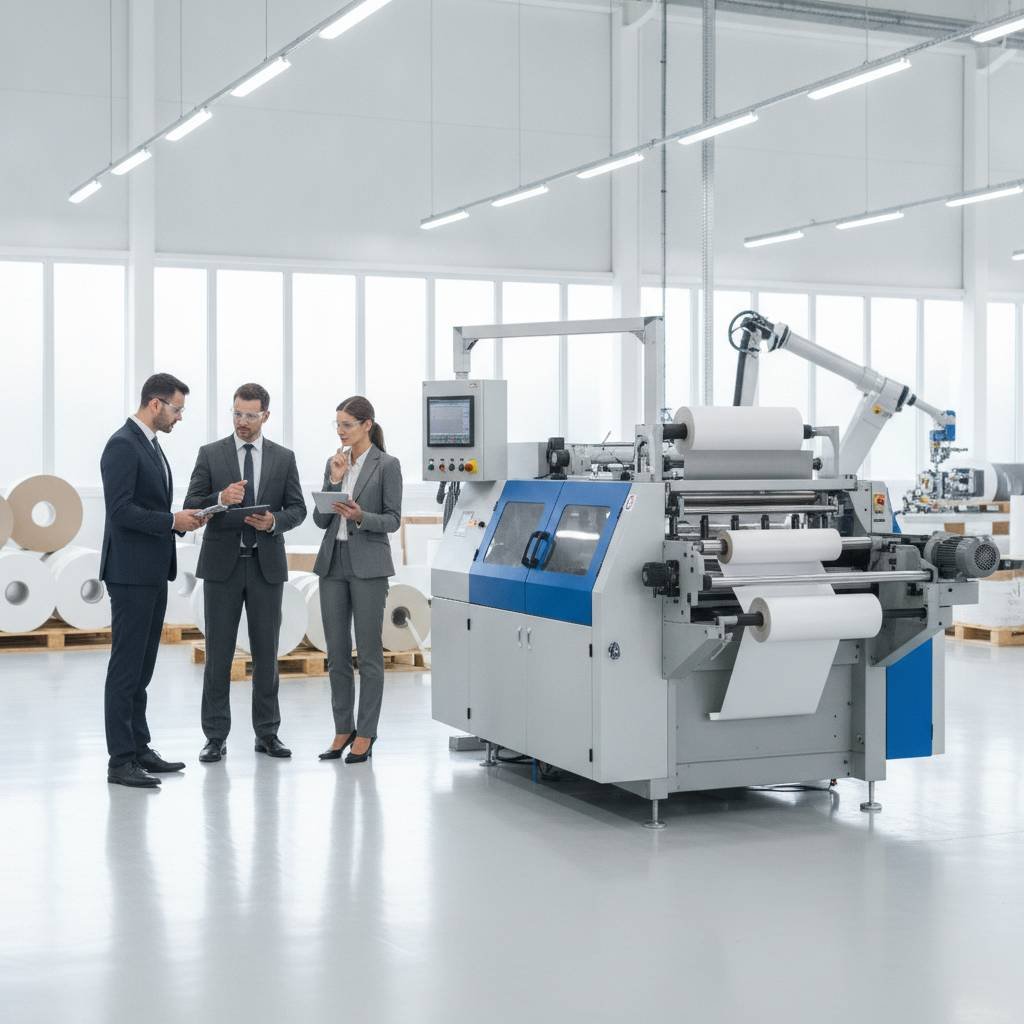
Why Does Our Material Type Change the Machine’s Cost?
A common mistake is to assume a “slitter is a slitter.” In reality, a machine configured for thick kraft paper will perform poorly with thin PET film, and vice versa. The machine’s design must account for the unique behavior of your material.
- Paper: Tends to create dust. A Paper Slitting Machine may need a dust extraction system. The tension control can be simpler, but the frame must handle heavy rolls.
- Films (PET, BOPP, PE): Prone to stretching, static, and wrinkling. This requires a highly sensitive tension control system found in our Label Film Slitting Machine.
- Nonwovens: Can be soft and stretchy. They often need special web guiding systems found in our Non Woven Slitting Machine.
- Foils (Aluminum, Copper): Very sensitive to tension. Our Aluminum Foil Slitting Machine is engineered for these high-precision tasks.
If a supplier provides a quote without asking about your material type and thickness, treat it as a preliminary estimate at best. The final configuration, and therefore the price, may need to change.
How Can We Compare Two Slitter Rewinder Quotations Fairly?
Placing two prices side-by-side is not a fair comparison. You need to compare the underlying technical specifications to understand what you are paying for.
Quotation Comparison Checklist
| Quotation Item | What to Check in the Specification | Why It Affects Cost and Performance |
|---|---|---|
| Machine Frame | Total machine weight (kg), frame construction material. | A heavier, rigid frame reduces vibration at high speeds but costs more in material and manufacturing. |
| Tension Control System | Method: Manual brake, magnetic powder brake, or servo motor control. | Servo systems offer precise tension for delicate materials but are a significant cost driver. |
| Blade System | Type: Razor, shear cutting (circular knives), or score cutting. | Shear cutting systems are more expensive but provide cleaner edges and longer life. Check our Slitting Machine Accessories for options. |
How to Prepare Your Inquiry for an Accurate Quotation
Instead of asking for “the price,” you will get a much more useful and accurate quotation by providing a few key details about your project. This allows a supplier to recommend the right machine configuration from the start.
Before you request a final quotation, prepare the following information:
- Material(s) You Will Slit: (e.g., BOPP film, kraft paper, spunlace nonwoven)
- Material Thickness Range: (e.g., 12-150 microns or 50-500 gsm)
- Parent (Jumbo) Roll Maximum Width & Diameter:
- Finished (Slit) Roll Minimum & Maximum Widths:
With this information ready, we can help you choose the best Paper Slitting Machine or other specialized equipment for your factory.