



You have sent out three requests for a "1300mm slitting machine" and received three quotes with prices that are thousands of dollars apart. One is suspiciously low, another is high, and the third is vague on details. Making a confident decision feels impossible.
This is a common frustration, but the problem is not always the suppliers. It is often the request. A slitting machine is not a standard commodity. A machine configured for thin film is fundamentally different from one designed for heavy paperboard, even if they share the same working width.
To get an accurate and comparable slitting machine quote, you should provide your material specifications (type, thickness range), your roll parameters (parent roll width and diameter, finished roll widths and diameters), and your production requirements (target speed, finished roll quality needs). Without these details, suppliers can only provide a rough estimate, not a serious proposal.
From a supplier’s perspective, a quotation is not for a generic "box." It is for a configured system. The frame, motors, tension control, and blade assembly are all selected based on the material you need to slit and the rolls you need to produce. Providing clear information upfront is the fastest way to get a proposal you can actually use for comparison.
Why Do My Initial Slitting Machine Quotes Vary So Much?
When a buyer inquiry is vague, suppliers are forced to make assumptions. One supplier might quote a basic, light-duty machine, while another quotes a robust, high-performance system. This is why the prices are so different.
A serious quotation is based on a configuration, not just a width. The final price reflects choices in:
- Frame and Construction: A machine for a 1-ton parent roll of paper needs a much heavier frame than one for a 400kg roll of film.
- Tension Control System: Simple materials may only need a magnetic powder brake for tension. Stretchy or sensitive films require a more precise (and more expensive) servo motor-driven tension control system to prevent defects.
- Blade System: The choice between razor blades, shear cutting, or score cutting depends entirely on your material.
- Automation Level: A basic machine assumes manual loading and unloading. A higher-priced quote might include features like automatic roll pushers or laser core positioning.
A supplier who gives you a price without asking about these factors is giving you a guess. A supplier focused on a good fit will ask questions first to help confirm the machine they propose will work for your operation.
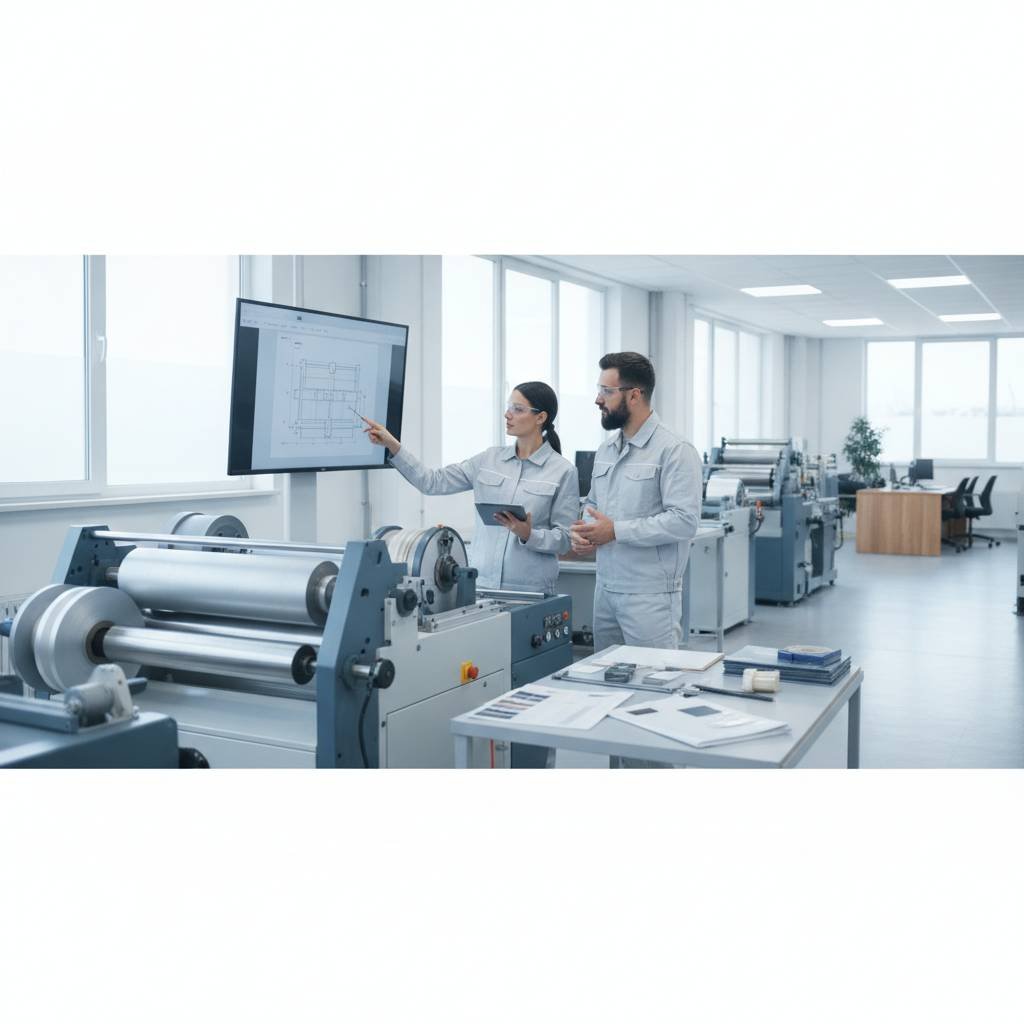
What Material Details Directly Affect the Machine’s Design and Cost?
Providing only a general material category like "film" or "paper" is not enough. Specific material properties dictate important machine components.
For example:
- Paper: Materials like thermal paper or glassine can generate significant dust. A suitable machine might need features for dust extraction. The material’s gsm (grams per square meter) directly impacts the required motor power and tension range.
- Thin Film: PET, BOPP, and PE films are prone to stretching, wrinkling, and static. This requires precise, low-tension control and may involve special anti-static bars or rollers in the web path.
- Nonwovens: Many nonwoven fabrics are stretchy and delicate. A standard center-winding rewinder might produce loose, unstable rolls. These materials often need a surface or combination rewinding system to create compact, usable finished rolls.
- Foils: Aluminum or copper foil is sensitive to scratches and requires extremely clean, burr-free edges. This influences the choice of a high-precision shear cutting system and the blade clearance settings.
- Adhesive Tapes & Labels: Sticky materials can cause glue to build up on rollers and blades, leading to downtime. A machine for these applications may need special non-stick coatings and a blade system designed to manage adhesive.
Before quoting, a supplier needs to know the exact material type, its thickness range (in microns or gsm), and any challenging properties like stretchiness or abrasiveness.
Which Roll Dimensions Determine the Machine’s Frame and Power?
Buyers often focus on the web width, but the roll diameters and weights are just as important for the machine’s core structure.
Consider these parameters:
- Parent Roll (Jumbo Roll) Maximum Diameter and Weight: This determines the size and strength of the unwinding stand. A 1500mm diameter, 1.5-ton paper roll requires a shaftless, floor-pickup unwinder and a powerful braking system. A smaller, lighter roll might be handled by a simpler shafted unwinder.
- Finished Roll (Slit Roll) Maximum Diameter: This dictates the size and power requirements of the rewinding section.
- Minimum and Maximum Slit Widths: This detail affects the design of the slitting section, including the blade shaft diameter and the type of spacers needed. A request for a very narrow minimum slit width (e.g., 10mm) requires a different setup than one where the minimum is 100mm.
- Core Inner Diameters: Specifying your unwind and rewind core sizes (e.g., 3-inch and 6-inch) confirms the quote includes the correct air shafts.
A machine built for a 1000mm diameter parent roll cannot safely handle a 1500mm roll, even if the width is the same. Providing these dimensions helps you avoid buying an under-specified machine.
What Production and Operational Needs Should I Include?
Your production goals and factory environment are the final pieces of the puzzle. Omitting them can lead to a machine that is technically functional but operationally inefficient.
Include these points in your request:
- Target Production Speed: Be realistic. Instead of asking for the machine’s maximum mechanical speed, state the stable, defect-free speed you need to achieve with your most common material.
- Finished Roll Quality: How do your finished rolls need to look? Do you need hard, dense rolls or soft rolls? Should the edges be perfectly flush? This requirement directly influences the rewinding method a supplier will recommend. A machine that produces telescoped or wrinkled rolls creates waste and problems for your next process.
- Automation and Handling: How will your operators handle the rolls? If finished rolls weigh over 50kg, a manual unloading system can be slow and present safety challenges. Consider specifying needs like an automatic roll pusher, an unloading tree, or other handling aids.
- Workshop Constraints: Mention your available factory space and power supply (voltage, phase, frequency). This helps confirm the proposed machine will physically fit and connect to your utilities without modification.
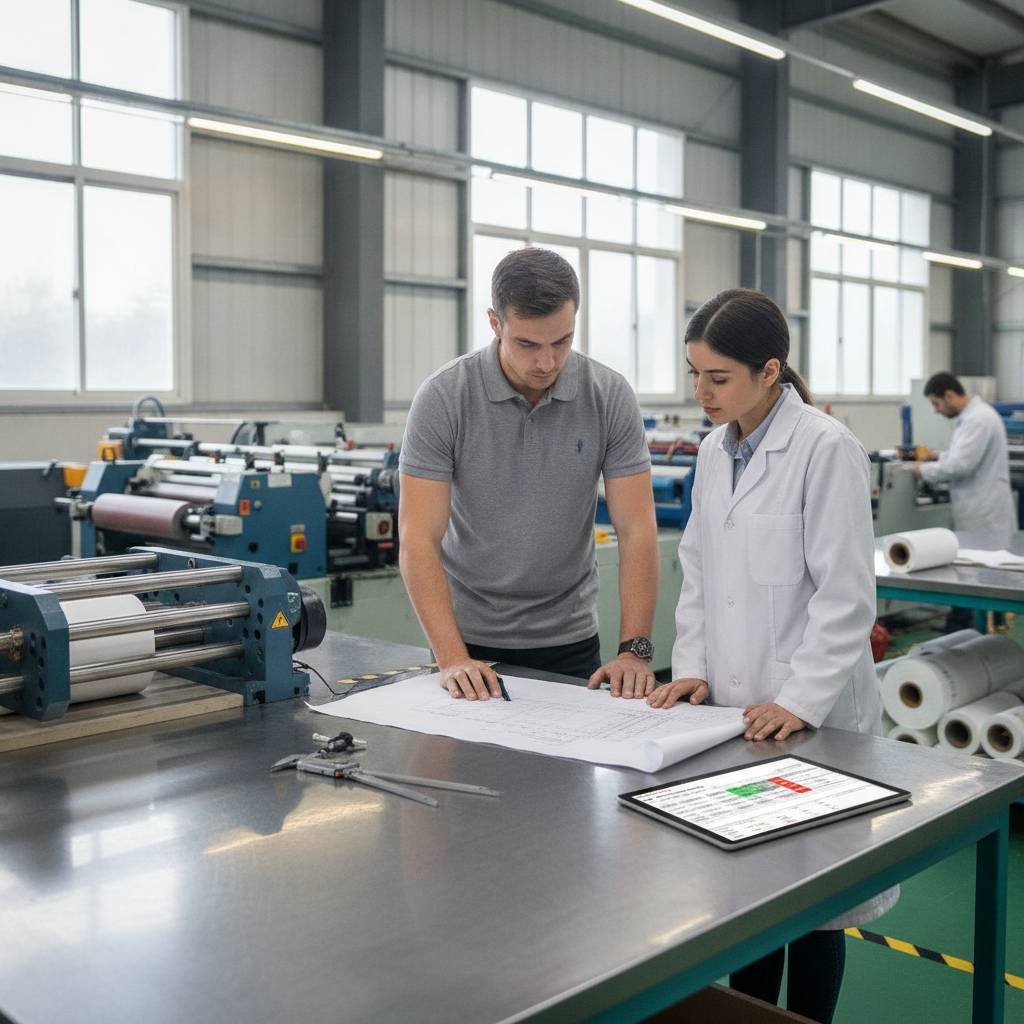
How Can I Structure This Information to Get a Clear, Comparable Quote?
An unstructured email with scattered details often leads to a slow and confusing quotation process. By organizing your requirements, you signal to suppliers that you are a serious buyer and enable them to provide a fast, accurate, and comparable proposal.
The following checklist covers the essential information. Using it to build your RFQ document can save weeks of back-and-forth communication.
Slitting Machine Quotation Preparation Checklist
| Information Category | Parameter to Provide | Why It Affects the Quote |
|---|---|---|
| 1. Material Specs | Material Type(s) (e.g., BOPP Film, Thermal Paper) | Affects tension control, blade choice, and web guiding. |
| Material Thickness Range (microns or gsm) | Influences motor power, tension range, and frame design. | |
| Special Properties (e.g., stretchy, sticky, abrasive) | May require special rollers, coatings, or blade systems. | |
| 2. Roll Dimensions | Parent Roll Max. Width | Defines the machine’s primary working width. |
| Parent Roll Max. Diameter & Weight | Determines the unwinder frame strength and loading method. | |
| Finished Roll Min. & Max. Slit Widths | Dictates the slitting section setup and spacer requirements. | |
| Finished Roll Max. Diameter | Determines the rewinder’s size and drive system. | |
| Unwind & Rewind Core Inner Diameter(s) | Confirms the required shaft sizes. | |
| 3. Production Needs | Desired Stable Production Speed (m/min) | Affects drive system, component balancing, and overall robustness. |
| Finished Roll Quality Needs (e.g., hard/soft, neat edges) | Influences the choice of rewinding method (center, surface, etc.). | |
| Automation Needs (e.g., auto unloading, laser positioning) | Clarifies scope and cost for labor-saving features. | |
| Workshop Constraints (e.g., space, power supply) | Confirms the proposed machine will fit and function in your facility. |
Preparing Your Inquiry
Before you request your next slitting machine quotation, use the checklist above to summarize your project’s key parameters.
Sending this information with your initial inquiry allows us to understand your application and prepare a detailed, relevant proposal. It is the first step toward finding a machine configuration that truly fits your production needs, rather than just getting another price on a list.