



A common and expensive mistake is ordering a "1300mm slitting machine" to process your 1300mm wide parent rolls. When the machine arrives, you discover the maximum material it can actually handle is only 1250mm. The machine is technically "1300mm," but not in the way that matters for your production.
This problem happens when your inquiry is based on incomplete specifications. You might provide a parent roll width, a minimum slit width, and a target finished roll diameter. A supplier can give you a price based on that. But a serious supplier will first ask about details you may have missed, like roll weight and the full range of slit widths you need.
To confirm your slitting machine’s dimensions before ordering, you must define four interconnected parameters: your maximum parent roll width and weight, the full range of required slit widths for your specific material, and your target finished roll diameter along with its calculated maximum weight. Getting these details right helps to specify the machine’s frame, blade system, and unloading method to match your actual production needs.
These details are not just for filling out a form. They are the foundation of your machine’s design. The relationship between these dimensions and the resulting roll weight determines the machine’s frame strength, motor power, tension control accuracy, and operational safety. Clarifying them now prevents major problems after delivery.
Why Doesn’t a "1300mm Machine" Always Fit a 1300mm Parent Roll?
The issue lies in the difference between the machine’s "web width" and the "maximum material width" it can process. Buyers often assume these are the same, but they are not. The machine’s web path needs extra space for essential components that operate on or near the edges of your material.
A machine’s stated web width must be wider than your material to accommodate:
- Web Guiding Sensors: These sensors read the edge of the material to keep it aligned, and they need physical space to be mounted.
- Material Clamps: At the unwind station, clamps hold the roll in place. These require space on the shaft beyond the edge of the material.
- Edge Trim: If you are trimming the edges of your parent roll, the trim itself takes up width within the machine’s path.
As a general rule, a machine web width that is at least 50-100mm wider than your widest parent roll is a good starting point. For your 1300mm material, you should be looking for a machine with a web width of 1350mm or 1400mm. Before you request a quote, measure your widest roll and ask the supplier for the "maximum material width" the machine can handle, not just its overall "web width."
What Should You Confirm About Your Parent Roll’s Width, Diameter, and Weight?
When specifying the parent roll, buyers usually provide the width and diameter. But the most overlooked parameter is weight. The machine’s unwinding stand, frame, and brake system are specified by weight capacity, not just the physical size of the roll.
An 800mm diameter roll of lightweight nonwoven fabric might weigh 100kg. An 800mm diameter roll of dense paperboard could weigh over 500kg. A machine built for the first roll will fail if loaded with the second. An under-specified unwinder can lead to frame vibration, poor tension control, and inconsistent slit quality.
Before inquiring, confirm these three parent roll details: 1. Maximum Width: The physical width of your widest roll. 2. Maximum Diameter: The full diameter of a new roll. 3. Maximum Weight: The actual weight of your heaviest roll.
Also, do not forget to confirm the inner diameter (ID) of the roll’s core. The difference between a 3-inch and 6-inch core requires a completely different unwinding shaft. Providing all these details allows a supplier to configure the unwinding stand and tension brake system correctly.
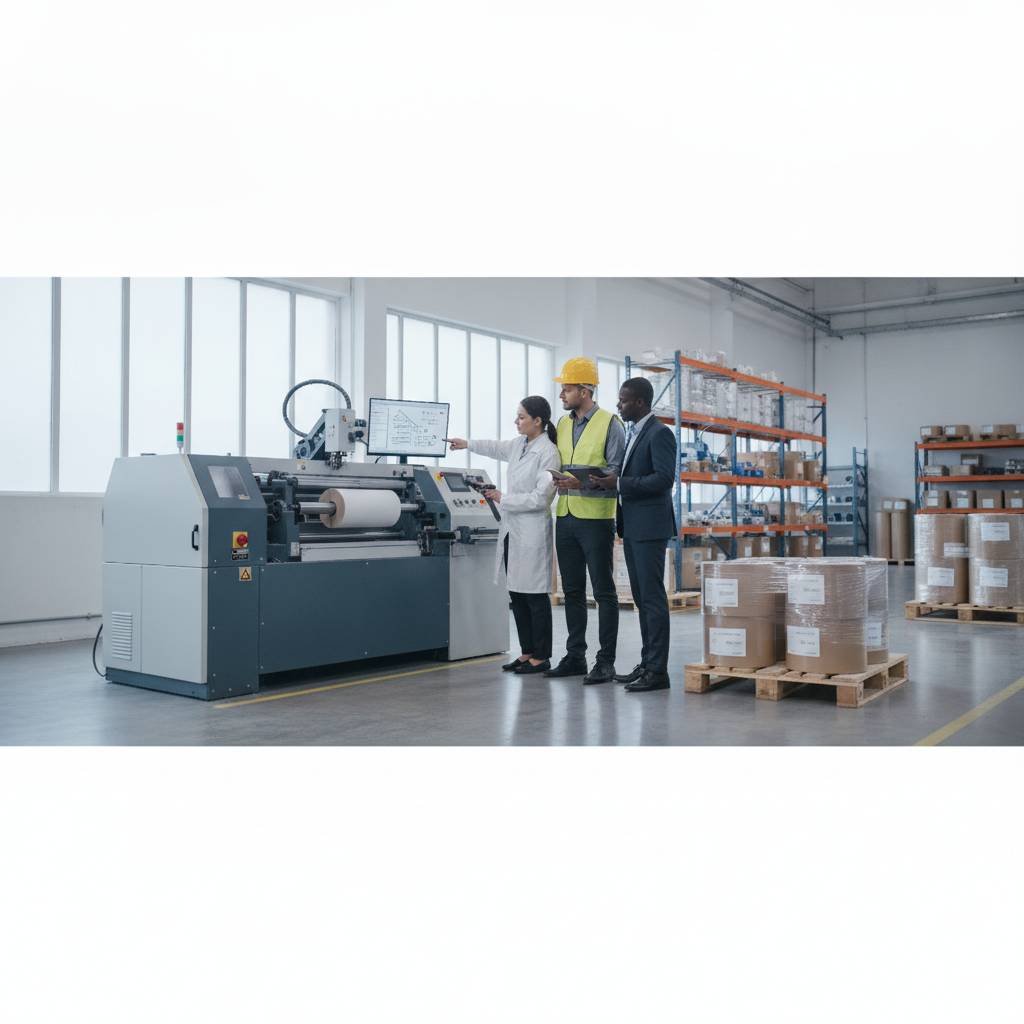
How Does Your Required Range of Slit Widths Affect the Machine?
Many inquiries state only the absolute minimum slit width required, for example, "we need to slit down to 25mm." This is a good start, as it helps determine the feasibility and the type of blade system needed (e.g., shear blades for paper, razor blades for thin film).
However, for your machine operators, the more important information is the full range of widths you will be producing every day. A machine’s practicality is defined by its spacer set-the metal rings that sit on the knife shaft to position the blades. If the standard set of spacers cannot be combined to create your most common widths, your operators will face long and frustrating setup times.
I would ask you to list not just the minimum width, but also your 2-3 most common production widths. This allows a supplier to propose a practical spacer plan. A well-planned set means your team can quickly combine spacers to hit your target widths, reducing machine downtime between jobs.
What Does Finished Roll Diameter Mean for Weight and Unloading?
This is an important point that buyers can miss. You might need a machine that can produce a 600mm diameter finished roll. But what does that roll weigh? The answer determines the strength of the rewinding shafts, the power of the motors, and, most importantly, how your operators will get the roll off the machine.
A 600mm diameter roll of paper can easily weigh over 150kg. A roll of thin film might be 70kg. Manually lifting rolls heavier than 25-30kg can introduce a risk of operator injury and is often inefficient. If your finished rolls are heavy, you must plan for how to handle them.
When you specify a finished roll diameter, a good supplier should ask about the material density to calculate the final roll weight. If the weight is significant, we should discuss an assisted unloading system. This could be a simple roll pusher that pushes the set of finished rolls onto a "tree" or trolley. It may seem like an extra cost, but it helps reduce a major operational bottleneck and safety risk before it happens.
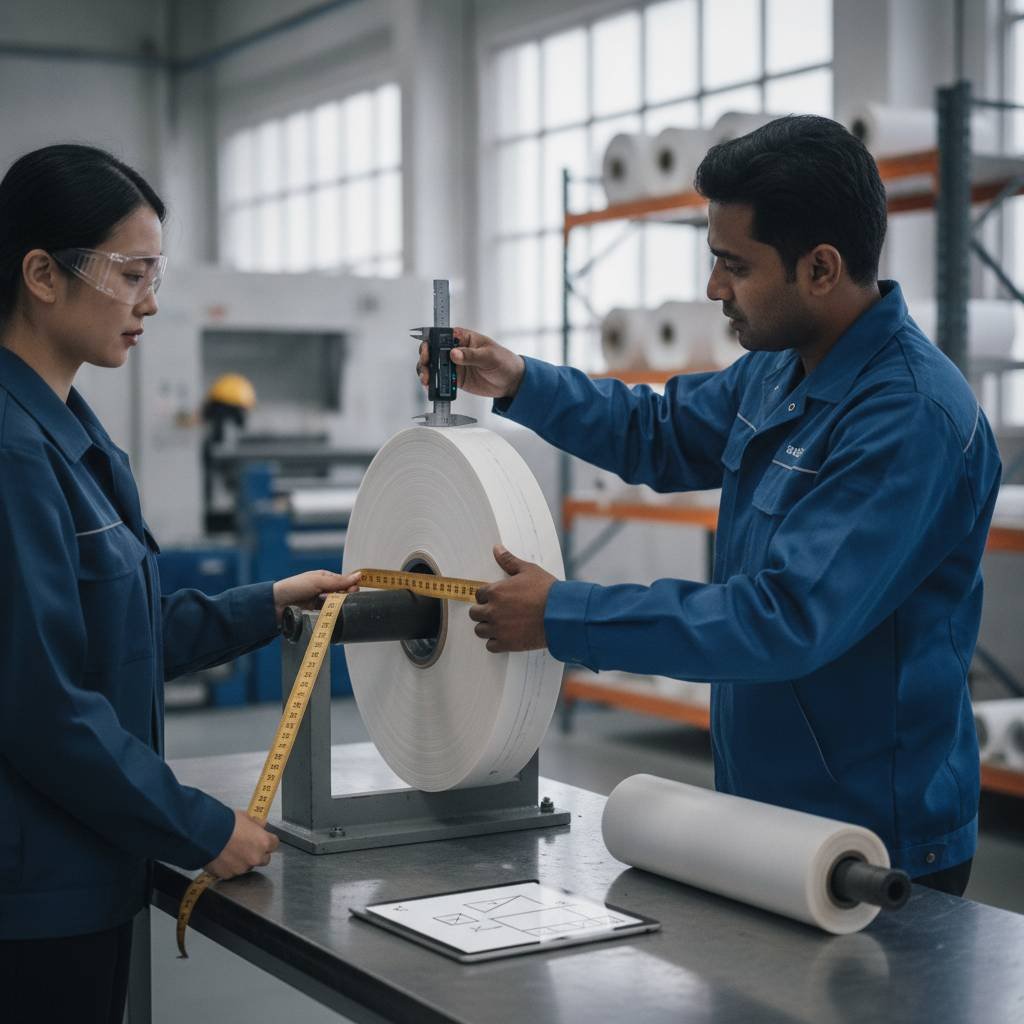
Checklist: Dimensional Data for an Accurate Slitter Rewinder Quotation
Sending a vague inquiry like "price for paper slitter" will get you vague and incomparable quotations. Use the points in this article to build a clear specification sheet. This allows suppliers to provide a meaningful proposal for a machine that is configured for your specific work.
The following table summarizes what you should provide and why it matters for the quotation.
| Specification Parameter | What You (the Buyer) Should Provide | What the Supplier Confirms (and Why It Matters) |
|---|---|---|
| Parent Roll Width | The maximum physical width of your material (e.g., 1300 mm). | The required machine web width (e.g., 1350 mm) to allow space for web guides and clamps. |
| Parent Roll Weight | The weight of your heaviest parent roll at max diameter. | The required load capacity for the unwinding stand and brake system to manage tension correctly. |
| Slit Widths | Your minimum, maximum, and 2-3 most common slit widths. | The most suitable blade system (e.g., shear for paper) and a practical spacer set for quick setups. |
| Finished Roll Diameter | The target diameter of your finished rolls (e.g., 600 mm). | The calculated maximum roll weight, which determines rewinding motor power and shaft strength. |
| Finished Roll Handling | Your current or planned process for moving finished rolls. | The need for an assisted unloading system if finished rolls are too heavy for safe manual handling. |
| Core Inner Diameter | The ID of your parent and finished roll cores (e.g., 3-inch or 6-inch). | The correct size for the unwinding and rewinding shafts to ensure compatibility with your stock. |
Before requesting a quotation for a slitting machine, take the time to gather this dimensional data. Having a clear specification sheet is an effective way to receive accurate, comparable proposals for a machine that will be a productive asset, not a source of problems.
When you are ready, send your specification sheet with the following details:
- Material Type and Thickness (e.g., 80gsm Kraft Paper, 12-micron PET Film)
- Maximum Parent Roll Width (mm) & Weight (kg)
- Parent Roll Core Inner Diameter (inch or mm)
- Required Slit Widths (Minimum, Maximum, and 2-3 most common)
- Target Finished Roll Diameter (mm)
- Finished Roll Core Inner Diameter (inch or mm)
This level of detail allows us to move directly to discussing the right machine configuration for your work, saving you time and helping you make a better-informed decision.