

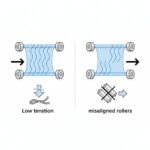

Your new slitting machine runs perfectly with standard PET film, producing clean, stable rolls every time. But the moment you load a roll of softer PE laminate, the finished rolls are a disaster—jagged edges, fine plastic dust, and so loose they start to telescope before they even leave the machine.
This is a common and frustrating problem. The machine seems fine, but the quality of your finished rolls is unpredictable, changing with every new material you run. This leads to high scrap rates, customer complaints, and the constant worry that your investment isn’t performing as it should.
The issue isn’t that your machine is broken. The problem is that when specifying a slitter for laminating films, many buyers focus on the wrong parameters, like maximum speed or the brand of the blade. The real factors that determine quality are more complex.
To achieve a clean edge and control roll hardness when slitting laminating film, a machine configuration should be selected based on the film’s specific structure and stretch properties. Key factors to confirm are the slitting method (shear vs. razor), the presence of a multi-zone tension control system to prevent deformation, and a winding method, like center-surface winding, that can build a stable roll at your target diameter.
This article explains what these systems are and why they are important for getting the quality you need, helping you specify a machine that works for all your materials, not just the easy ones.
Why Does My Slitting Quality Change with Different Laminating Films?
Laminating film is not a single material. It’s a composite, often combining layers with very different properties—a rigid PET layer bonded to a soft, stretchy PE layer, for example, or a film bonded to a thin foil. A machine set up to slit a hard, stable film will almost certainly struggle when faced with a soft, stretchy, or static-prone laminate.
The mistake is thinking a slitter is a one-size-fits-all solution. A machine’s ability to produce quality rolls from a challenging material depends on a complete, matched system. A cheaper machine often looks good on paper but fails in practice because it lacks sophistication in one of three areas: the slitting station, the tension control, or the winding technology.
What Really Determines a "Clean Edge" on Laminates?
Buyers often request a "high-quality blade," assuming this is the key to a clean edge. While a good blade is part of the solution, it’s only a small part of the story. For laminating films, a clean edge is the output of a stable, well-configured slitting system.
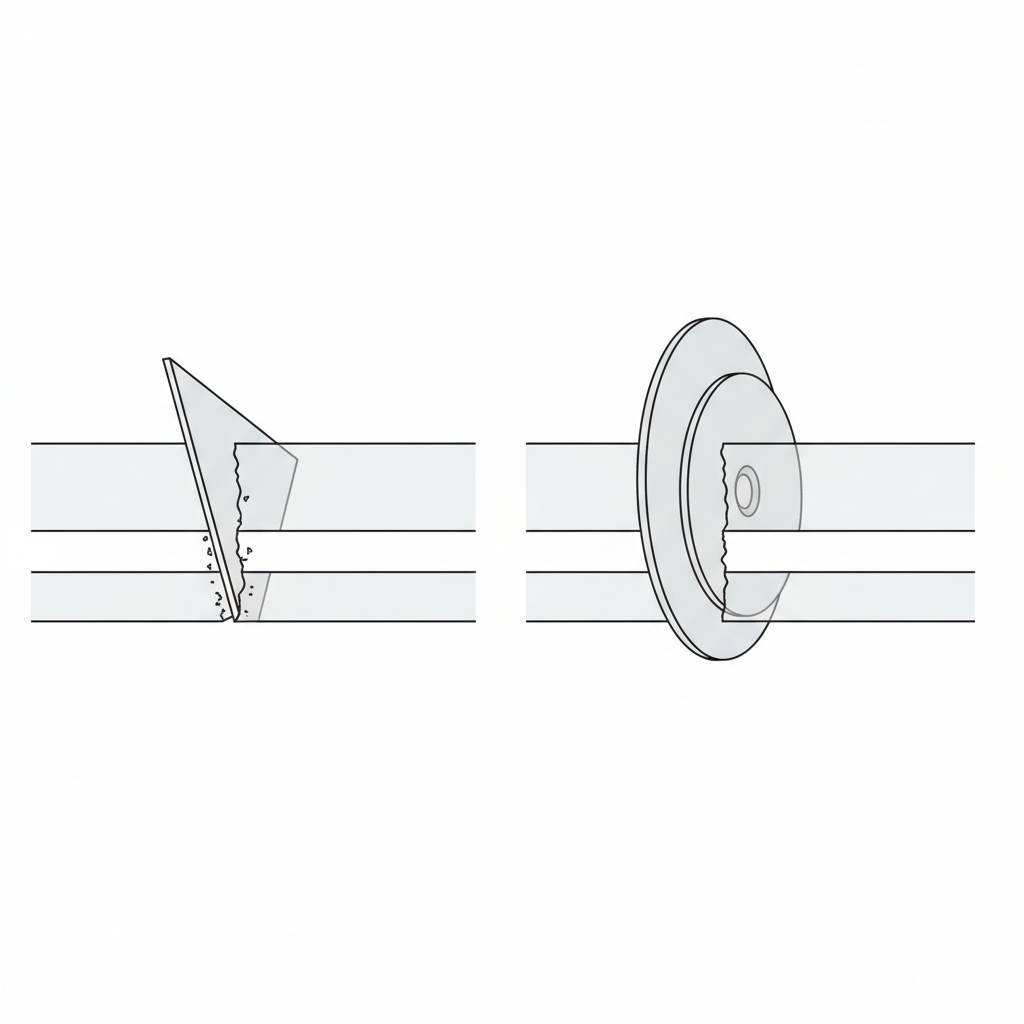
- Slitting Method (Shear vs. Razor): Razor slitting can be effective for hard, single-layer films. However, on a soft laminate, a razor blade can drag or melt the material, creating a rough edge and fine plastic dust ("angel hair"). Shear slitting, which uses a pair of overlapping circular blades like scissors, often provides a cleaner, more controlled cut on multi-layer films. The choice depends entirely on your film’s structure.
- System Rigidity: At speed, even minor vibrations in the blade holders or knife shafts can result in a wavy, inconsistent edge. A machine with a heavy, rigid frame and large-diameter, precision-ground shafts is important for minimizing vibration and maintaining a stable cut.
- Web Tension: If the film is too loose or too tight as it enters the blades, it cannot be cut cleanly. The tension leading into the slitting station needs to be precisely controlled and isolated from the rest of the machine.
How Does the Winding Method Control Final Roll Hardness?
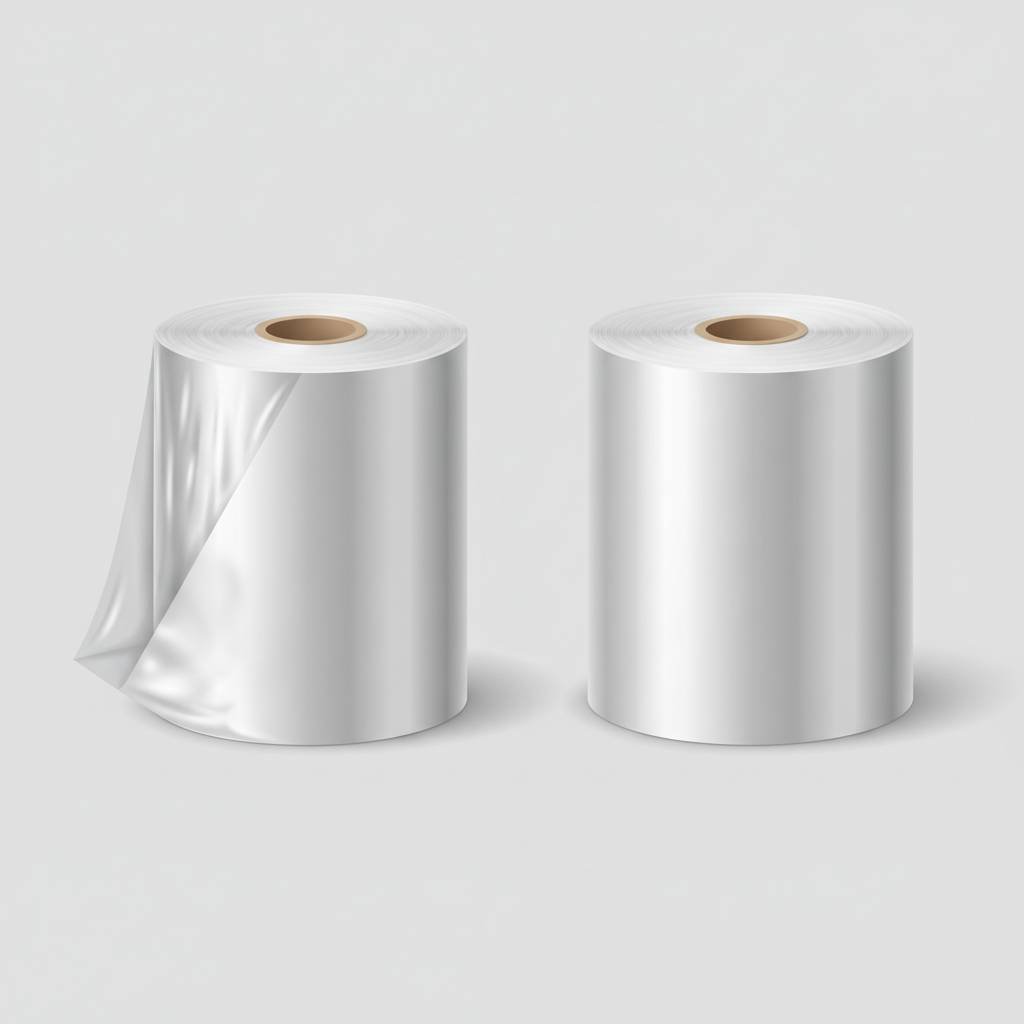
An inconsistent roll—one that’s too tight in the center and too loose on the outside—is a common source of waste. This defect, which leads to blocking or telescoping, is often caused by an inappropriate winding method for the material and roll size.
- Center Winding: This simple method drives the rewind shaft core. As the roll gets bigger, the torque required to turn it increases, making it very difficult to maintain consistent density. The inner layers get compressed tightly while the outer layers become loose. This may be acceptable for small-diameter rolls, but it can be a major cause of telescoping on larger rolls.
- Center-Surface Winding: This more advanced method uses both a driven core and a contact roller that lightly presses against the outside of the growing roll. This combination provides far superior control over roll structure and density from the core to the final diameter. The contact roller helps lay down outer layers firmly but without the excessive tension that causes blocking. For finished rolls over 400-500mm in diameter, a center-surface system becomes an important consideration for producing stable, usable rolls.
The counterintuitive point is that the fastest machine is not always the most productive. A machine with superior tension and winding control running stably at 300 m/min is far more productive than a "500 m/min" machine that you can only run at half speed to avoid creating defects.
Specification Checklist: Comparing Laminating Film Slitter Quotes
When you receive quotations, they can be difficult to compare. Use this checklist to look past the basic specs and ask questions that reveal the machine’s true capability for handling laminating film.
| Quality Goal | Why a Simple Request is Incomplete | What to Check in the Quotation | Follow-up Question for Supplier |
|---|---|---|---|
| "I need a clean edge." | Cleanliness depends on the film’s structure. A razor can melt soft layers; a shear blade can create burrs if not set correctly. | Does the quote specify Shear or Razor slitting? Is the blade holder design rigid? | "Based on my film sample, can you run a test to show an edge free of burrs at my target speed?" |
| "The machine must have tension control." | A single unwind brake is not enough. Stretchy films require isolated tension zones to prevent deformation before and after the cut. | Does the machine have independent tension zones with driven nip rollers? Are load cells used for closed-loop feedback? | "Can you show me on the diagram where the separate tension zones are created? How is tension measured and controlled?" |
| "I need to control roll hardness." | Hardness is determined by the winding method. A simple center-winder often causes defects on larger rolls. | For my target finished roll diameter, is a center-surface winding system included? Is the pressure of the contact roller adjustable? | "What is the maximum finished roll diameter you recommend for the quoted winding system to avoid telescoping with my material?" |
| "What is the maximum speed?" | Usable speed for a delicate film is often limited by static or wrinkling, not the machine’s mechanical maximum. | Does the configuration include anti-static bars and a spreader roller (e.g., bowed roller) to help achieve stable runs? | "What is a realistic, stable production speed you would expect for my most challenging film on this machine?" |
What Material and Roll Data Should I Prepare Before Requesting a Quotation?
Vague inquiries lead to vague quotations. To get a fast and accurate proposal for a slitting machine that will produce clean edges and stable rolls, you should provide specific information. A serious supplier will ask for these details anyway.
Before contacting us, please prepare the following:
1. Material Information: A list of the main laminating films you run (e.g., PET/PE, BOPP/CPP, PET/Alu/PE), including the thickness of each layer if possible. 2. Parent Roll Specs: The maximum width, diameter, and weight of the rolls you will be loading. 3. Finished Roll Specs: Your target finished roll diameters, the minimum slit width you require, and the inner diameter of the cores you use. 4. Known Issues: If you are currently slitting, send photos or descriptions of any defects you are trying to solve (e.g., telescoping, burrs, wrinkles).
Sending this information allows our engineers to move beyond generic models and recommend a specific machine configuration that is well-matched to your production needs. It’s the first step toward getting the consistent, high-quality output your business depends on.