

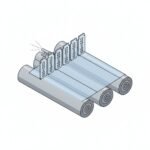
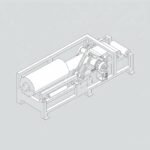
When you compare two slitting machine quotations, you might notice “Web Guiding System” listed on both. If one machine is less expensive, it is easy to think it is a better deal. The real difference, however, may be hidden in that single line item.
The assumption that all web guiding systems are the same is a common and costly mistake. This component is not a generic accessory; its specification has a direct impact on your material waste, finished roll quality, and how fast you can actually run your machine. A mismatch can lead to operators being forced to slow down production just to manage the web, negating the investment in a high-speed machine.
A web guiding system matters because it directly impacts finished roll quality and material waste. The system’s effectiveness depends on matching the sensor type to your material’s properties (e.g., transparent, opaque, porous), the system’s responsiveness to your production speed, and the guiding method (edge or line) to your final product requirements.
From a supplier’s perspective, the term “web guiding system” on a quotation is not enough information. Before we can recommend a suitable machine, we need to understand your material and your production goals. Choosing the right system is a core part of configuring a slitter rewinder that works reliably for your specific application, rather than just in a demo video.
How does a web guide affect finished roll quality and material waste?
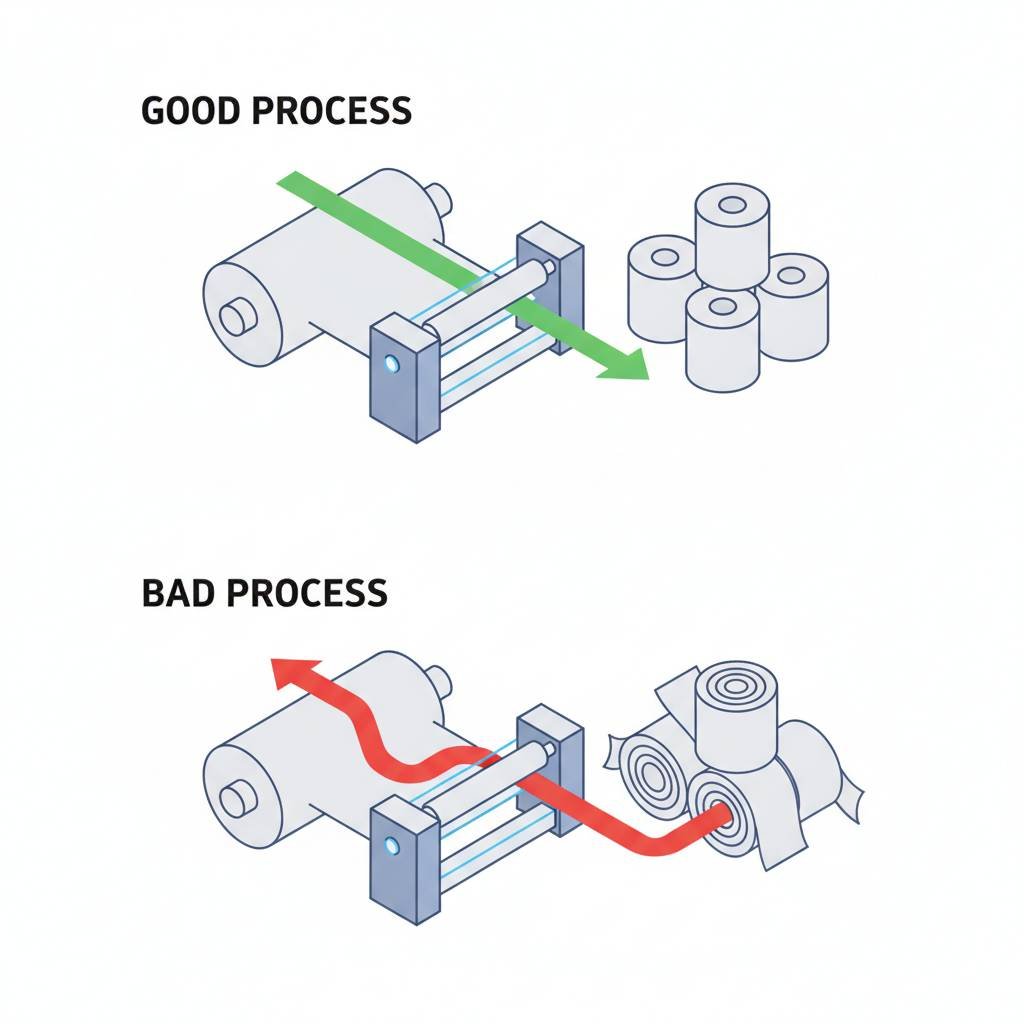
A web guide does more than just keep the material centered. Its primary job is to feed a stable, consistently aligned web into the slitting blades. When the web is unstable, even by a few millimeters, it directly causes expensive defects.
An unguided or poorly guided web can wander from side to side. This movement results in uneven or wavy slit edges, which are often a primary cause for customer rejection. It can also lead to “telescoping,” where layers of the finished roll shift sideways, or “tapered rolls,” where one side is tighter than the other. These defects make the rolls difficult to use in subsequent processes and can lead to significant waste.
A well-specified guiding system helps reduce the amount of material that must be trimmed from the edges of the parent roll. If the web position is stable, you can operate with a narrower edge trim, saving a surprising amount of material over thousands of meters.
What sensor type do I need for my material (film, paper, nonwoven)?
The sensor is the “eye” of the web guiding system. If the sensor cannot “see” your material’s edge accurately, the entire system is ineffective. This is a common point of failure when a system is not specified correctly. The technology should match the material’s properties.
- Infrared (IR) Sensors: These are standard for opaque materials like paper, aluminum foil, and dark-colored films. They work by detecting the difference between the material blocking the light and the open air next to it. They are cost-effective and reliable for these applications.
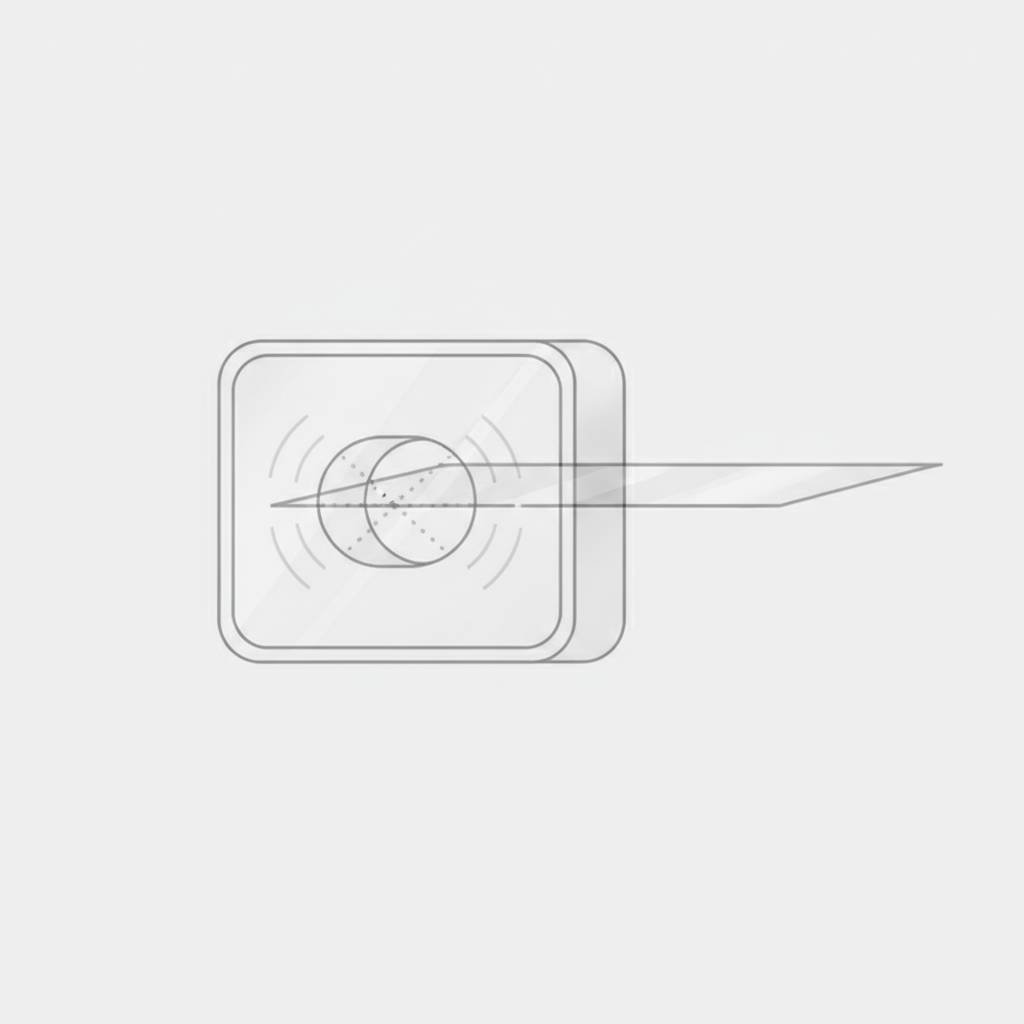
- Ultrasonic Sensors: If you are slitting clear or transparent materials like PET or BOPP film, an infrared sensor will not work because the light passes straight through. An ultrasonic sensor is a common requirement. It uses sound waves to detect the material’s edge, making it suitable for clear films and also for porous materials like nonwovens where light might pass through the fabric.
- CCD Optical Sensors: If you are slitting a printed web, you may need to guide based on a printed line or contrast mark, not the physical edge of the material. This can be essential for maintaining consistent print margins on the finished rolls. A CCD (camera-based) sensor is used for this Line Position Control (LPC).
Simply asking if a machine has a web guide is not enough. You should confirm that the quoted sensor technology is a match for your specific material.
How does production speed influence the web guiding system I need?
A machine’s maximum speed and its stable, high-quality production speed can be two different things. The web guiding system’s responsiveness is often a deciding factor.
As production speeds increase, for example into the range of 250-300 m/min or higher, the system’s actuator must make very fast, precise corrections to keep the web aligned. A standard, slower motor-driven actuator might not be able to keep up. When it falls behind, it can over-correct, causing the web to oscillate back and forth. This is often called “hunting.” This oscillation creates wavy edges and forces the operator to reduce the machine’s speed to a level where the guide can function properly.
For high-speed or high-precision applications, a servo-driven actuator is often recommended. It has a much faster response time, allowing it to make the small, rapid adjustments needed to maintain web stability at speed. While it adds cost to the machine, it allows you to actually use the high-speed capability you are paying for and can result in higher overall output.
Checking Your Web Guide Specification
When you receive a quotation, the web guiding system should be more than just a single line item. Use this table to check if the specification makes sense for your application and to ask your supplier clarifying questions.
| Material Property | Common Sensor Choice | What Can Go Wrong If Mismatched | What to Confirm with Supplier |
|---|---|---|---|
| Opaque (e.g., Kraft Paper, Aluminum Foil) | Infrared (IR) | N/A (This is a common, cost-effective option for opaque materials) | “Is the standard infrared sensor suitable for my material’s dust levels?” |
| Transparent / Clear (e.g., PET, BOPP Film) | Ultrasonic or CCD Optical | An IR sensor cannot “see” the edge of clear material, causing total system failure and web drift. | “My material is clear film. Please confirm the quote includes an ultrasonic or suitable optical sensor.” |
| Porous (e.g., Nonwoven Fabric) | Ultrasonic | An IR sensor may give false readings. Highly porous material can sometimes challenge even ultrasonic sensors. | “My nonwoven is porous. Is the proposed ultrasonic sensor suitable for this application?” |
| Printed Web (e.g., Printed Film) | CCD Line/Contrast Sensor | An edge guide follows the physical edge. If the print wanders, slit rolls will have inconsistent print margins. | “We must maintain a consistent print margin. Please confirm the quote includes a CCD line-guiding system.” |
How to Prepare Your Inquiry for the Right Web Guiding System
To get a quotation for a slitting machine that is truly configured for your needs, it helps to provide key details about your process upfront. This allows a supplier to recommend the correct web guiding system from the start, leading to a more accurate proposal and a machine that performs as needed for your application.
Before your next inquiry, try to have this information ready:
- Your primary material type: For example, PET film, kraft paper, spunbond nonwoven, or aluminum foil.
- Key material properties: Is it transparent, opaque, porous, or printed?
- Your target stable production speed: What speed do you need to run at consistently to meet your output goals?
- Your guiding reference: Do you need to guide based on the material’s edge or a printed line?
- Required slitting accuracy: What is the acceptable tolerance for your finished rolls (e.g., +/- 0.5mm)?
Sharing these details helps a supplier move beyond a generic quote. It allows for a technical discussion about configuring a machine that will reliably produce high-quality rolls from your specific material, at your required speed.