

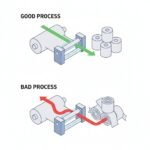
Comparing two quotations for a BOPP tape slitter based on price and maximum speed seems logical, but it’s a common path to a bad investment. The machine with the lower price often lacks the specific features needed to handle adhesive, leading to constant stops for cleaning blades and high material waste.
Many inquiries start with, “I need a quote for a 1300mm BOPP tape slitter.” A generic supplier might send a price list. An experienced supplier will first ask about your adhesive type and current roll quality problems.
The difference in that response is where your evaluation should begin. The most common complaint after buying a new tape slitter isn’t that it’s too slow; it’s the constant downtime from adhesive build-up.
When checking a BOPP tape slitting rewinder, buyers should focus on the supplier’s solutions for managing adhesive build-up, the type of rewinding system used to help prevent roll telescoping, and the stability of the tension control for your specific material. These details often have a greater impact on production quality and downtime than the machine’s maximum speed or base price.
From a supplier’s perspective, a BOPP tape slitter is not a standard film slitter. The adhesive is an active part of the process that must be managed. A machine that looks good on a specification sheet can fail in daily production if it wasn’t configured to handle the specific challenges of a sticky, stretch-sensitive material. The goal is to configure a machine that produces sellable rolls, not just one that runs fast.
Why can focusing only on price and speed lead to problems with BOPP tape?
A lower price and a higher maximum speed on a quotation are attractive, but for adhesive tape, these numbers can be misleading. The real measure of productivity is the volume of quality, sellable rolls produced per shift, not the machine’s theoretical top speed.
Running a slitter at its maximum mechanical speed increases friction and heat. For BOPP tape, this heat can soften the adhesive, making it more aggressive. The result is increased glue build-up on blades and guide rollers, which forces operators to stop the machine frequently for cleaning. This unplanned downtime, combined with the material wasted during stops and restarts, often negates any advantage of a higher speed. A cheaper machine frequently omits the very features designed to prevent this, such as specialized roller coatings or blade lubrication systems. I would ask a supplier about the recommended stable production speed for your tape, not just the maximum mechanical speed.
What machine features help reduce adhesive build-up and downtime?
This is one of the most practical areas to check. If a supplier’s quotation doesn’t mention specific anti-adhesive measures, you should ask about them directly.
- Non-Stick Roller Coatings: Standard chrome or rubber rollers can attract adhesive. Look for options like Teflon coatings or specialized hard chrome plating on idle rollers in the web path. This makes the surfaces less prone to glue accumulation, reducing cleaning time and preventing glue from transferring to the non-adhesive side of your tape.
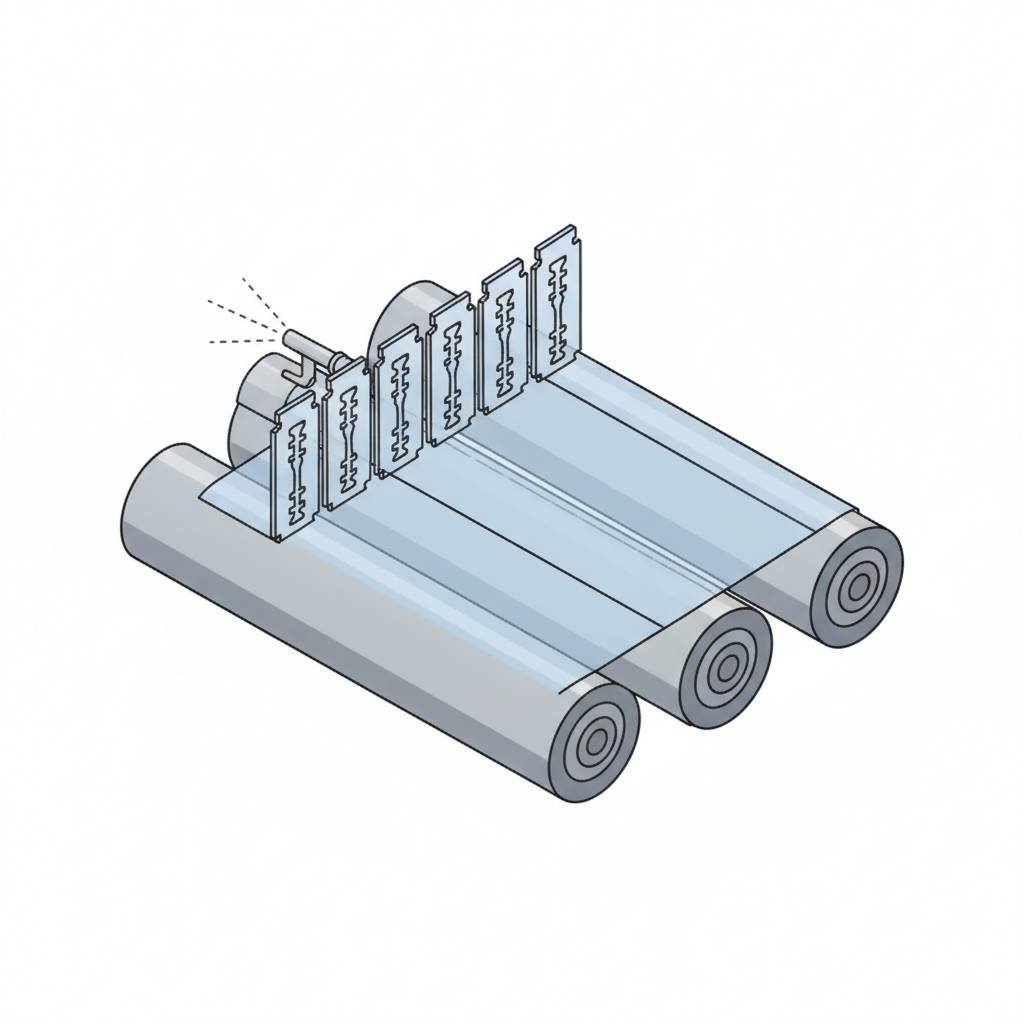
- Blade Lubrication or Wetting Systems: Even with the right blade type, adhesive can stick. Some machines can be configured with a system that applies a fine mist of a release agent (like silicone-treated water) to the blades during slitting. This small detail can dramatically reduce how often operators need to stop and clean the blades.
- Blade System and Angle: The choice between razor slitting and shear slitting depends on your material and production goals. For BOPP tape, the angle and sharpness of the blade are also important factors. A supplier with experience in tape will be able to discuss the trade-offs for your specific application.
How can you confirm a machine’s rewind quality for your tape rolls?
Producing a roll of tape with clean edges is only half the battle. The finished roll must be wound with uniform tension to prevent defects like telescoping (where layers shift sideways) or starring (caused by excessive internal pressure).
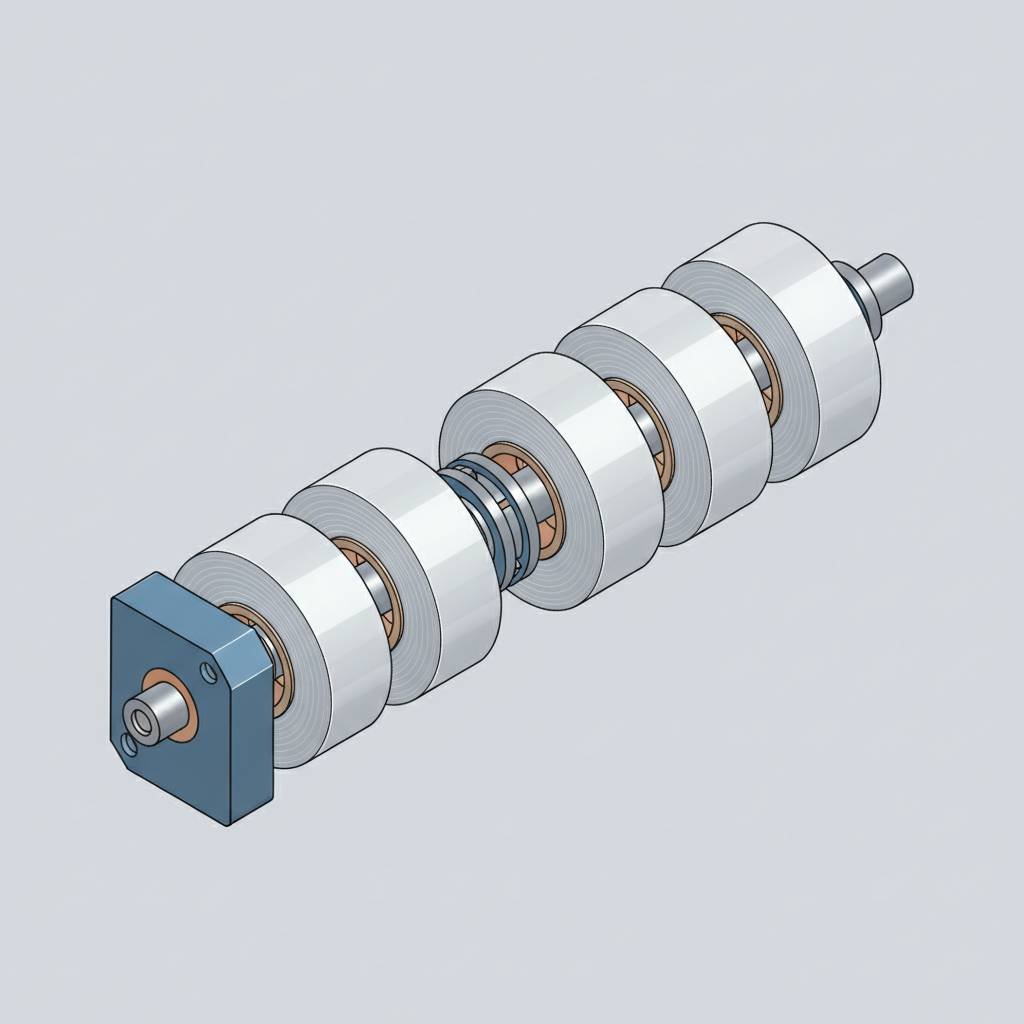
The component to check closely here is the rewinding shaft. A basic machine might use a standard air shaft, which applies the same winding torque across all rolls. For BOPP tape, especially when slitting into narrow widths, this is often not enough. Slight variations in material thickness can cause some rolls to wind tighter or looser than others.
A better solution is a differential friction rewinding shaft. This type of shaft allows each individual roll to slip slightly as needed, compensating for gauge variations and helping every roll on the shaft to be wound to the same, consistent density. When you compare quotations, I would check if differential shafts are included. If one quote is significantly cheaper, this is often a feature that has been omitted.
What questions should a knowledgeable supplier ask about your tape material?
You can learn a lot about a supplier’s expertise by the questions they ask you. A supplier who is simply trying to sell a machine will accept your inquiry and send a generic price. A supplier focused on providing a solution will need more data.
Be prepared to answer, and be wary of any supplier who doesn’t ask:
- What is the adhesive type (e.g., acrylic, hot melt, rubber-based)?
- What is the thickness of the BOPP film and the adhesive coating?
- What is the width and diameter of your parent rolls?
- What are your required finished roll widths (especially the minimum width)?
- What are your current slitting problems (e.g., telescoping, dusty edges, glue on roll faces)?
- What is your desired finished roll hardness?
These questions are not meant to complicate the process. They help the supplier to configure a machine with the right tension control, blade system, and anti-adhesive features for your specific product.
What should be on my final checklist before choosing a supplier?
Before making a final decision, use this checklist to compare how different suppliers approach your project. A strong technical proposal can be a better indicator of future success than a low price.
Supplier Evaluation Checklist for BOPP Tape Slitters
| Weak Signal (Generic Supplier) | Strong Signal (Expert Supplier) | Why It Matters for BOPP Tape |
|---|---|---|
| Quotes based on max speed and width only. | Asks for your target stable production speed for quality rolls. | Running too fast increases heat and adhesive build-up, causing more downtime than a slightly slower, stable speed. |
| Offers a “standard film slitter.” | Specifies anti-adhesive features like non-stick roller coatings or a blade lubrication system. | Helps prevent glue from accumulating on machine parts, which causes web tracking issues, product contamination, and frequent cleaning stops. |
| Quotes a standard air shaft for rewinding. | Discusses differential friction shafts for uniform roll tightness. | Differential shafts compensate for material variations, helping to prevent loose/tight rolls and telescoping, especially on narrow slits. |
| Accepts the inquiry without asking about the material. | Asks for details on your adhesive type (e.g., acrylic, hot-melt) and coating thickness. | Different adhesives require different machine configurations (e.g., roller coatings, blade angles) to manage tackiness effectively. |
| Provides a vague specification list. | Explains how the tension control system maintains stability from unwind to rewind. | Stable tension is useful for preventing material stretch, wrinkles, and inconsistent roll density. |
Preparing Your Inquiry
The goal of your first contact with a supplier should be to start a technical conversation, not just to get a price. A well-prepared inquiry helps a supplier understand your needs and propose a machine that will actually work for you.
Before requesting a quotation, try to gather the following details:
- Material & Adhesive: BOPP film thickness and the specific adhesive type (e.g., acrylic, hot melt, rubber-based).
- Roll Dimensions: Your parent roll width and maximum diameter, and your required range of finished roll widths and diameters.
- Quality Goals: Your desired finished roll appearance (e.g., roll hardness, clean edges) and any current slitting defects you want to eliminate.
- Production Target: Your target stable production speed or required output per shift.
Sending these details with your inquiry makes the quotation process faster and improves the chances that the proposed machine is a good fit for your factory from the start.