


Definition and Role of a Film Slitting Machine
What Is a Film Slitting Machine?
A film slitting machine is specialized industrial equipment designed to cut wide rolls of plastic film into narrower rolls with high precision. As a material-focused variant of a slitting machine, it enables efficient conversion of large master rolls into sizes suitable for packaging, laminating, coating, or printing applications while preserving material integrity.
In most film converting operations, slitting and rewinding are performed using a slitter rewinder machine, which integrates controlled cutting and rewinding to maintain stable tension and uniform roll formation throughout the process.
Why Film Materials Require Dedicated Slitting Machines
Film materials are lightweight, flexible, and highly sensitive to mechanical stress, static charge, and tension variation. Dedicated film slitting machines incorporate refined tension control, optimized blade selection, and precise web tracking to prevent stretching, wrinkling, or surface damage. Compared with more rigid substrates, film demands greater process stability to ensure clean edges and consistent roll quality.
How a Film Slitting Machine Works (High-Level Overview)
Key Steps in the Film Slitting Process
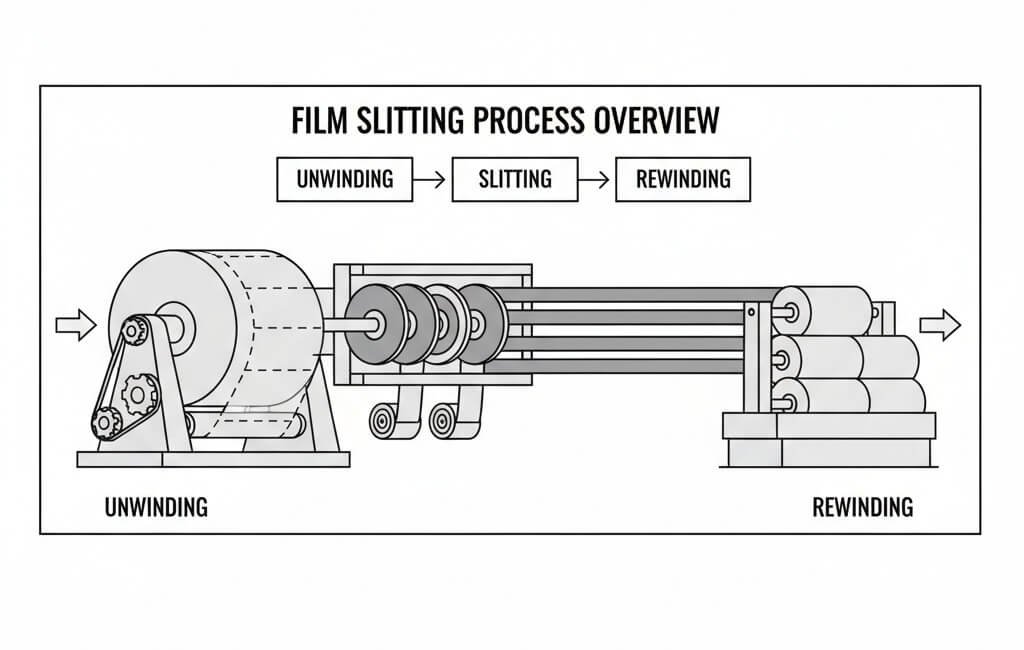
The process begins with controlled unwinding of the film roll, where steady tension is applied to avoid slack or overstretching. The film web then passes through the slitting section, where the wide material is cut into narrower strips using blades designed for polymer substrates. After slitting, each strip is rewound onto individual cores under carefully regulated tension to produce uniform, defect-free rolls ready for downstream use.
Slitting Methods Used for Film
Common slitting methods for film include razor slitting and shear slitting. Razor slitting employs extremely sharp blades to slice through thin films with minimal stress, making it suitable for delicate or low-gauge materials. Shear slitting uses paired rotary knives that cut like scissors, offering improved edge quality for thicker or more dimensionally stable films. Method selection directly affects edge finish, tension requirements, and overall process stability.
Core Components of a Film Slitting Machine
Film Unwinding and Web Handling
The unwinding system supports smooth and consistent release of the parent film roll. Dynamic tension control compensates for film elasticity, while web guides and rollers ensure accurate alignment before the material enters the slitting zone. Proper web handling at this stage reduces the risk of wandering, wrinkling, or telescoping during cutting and rewinding.
Slitting Unit and Blade Types for Film
The slitting unit houses cutting blades selected for their sharpness and compatibility with film materials. Blade geometry, spacing, and alignment are adjustable to accommodate different slit widths and film properties. Maintaining blade sharpness is especially important for film, as dull or damaged blades can produce ragged edges that compromise downstream performance.
Winding and Rewinding Mechanisms
After slitting, rewinding mechanisms collect the narrow film strips into finished rolls. These systems regulate winding tension to achieve uniform roll density and prevent deformation such as wrinkles or telescoping. Proper rewinding ensures the slit film remains easy to handle and suitable for subsequent processing stages.
Material Considerations: Challenges Unique to Film
Importance of Tension and Tracking for Film
Precise tension control is critical due to film’s thinness and elasticity. Excessive tension can stretch or tear the web, while insufficient tension may cause wrinkles or misalignment. Accurate web tracking helps maintain lateral stability, reducing the risk of overlapping strips or edge damage during slitting and rewinding.
Blade Selection and Cut Quality in Film Slitting
Blade selection plays a central role in achieving clean cuts and stable edges. Soft polymer films require blades that maintain sharpness and appropriate cutting angles to minimize burrs or edge roughness. Regular inspection and replacement of blades help maintain consistent cut quality and reduce material waste.
Handling Film-Specific Failure Modes
Common failure modes in film slitting include edge fraying, web tearing, and static-induced web cling. These issues often result from improper tension profiles, worn blades, or insufficient static control. Addressing these challenges requires coordinated adjustment of mechanical settings and environmental conditions.
Quality Control and Typical Issues When Slitting Film
Signs of Quality Problems in Slit Film
Quality issues are often indicated by uneven or ragged slit edges, web wandering during operation, or telescoping in rewound rolls. Such symptoms typically point to blade wear, tension inconsistencies, or alignment errors that must be corrected to maintain product quality.
Operator Practices That Impact Film Slitting Results
Operator attention to tension settings, alignment checks, and blade condition significantly influences slitting outcomes. Continuous observation of web behavior during operation helps identify early signs of instability, supporting timely adjustments and consistent production quality.
Key Reference Principles for Film Slitting Machines
Principles of Blade Geometry and Material for Film
Blade geometry and material selection directly affect cut consistency for film. Blades must be sharp and compatible with the film’s softness and thickness to reduce edge defects and extend tool life.
Web Path Configuration Essentials
Roller arrangement and tension control design are essential for stabilizing the film web throughout the slitting process. A well-designed web path maintains alignment and uniform tension, minimizing wrinkles, slack, and lateral drift.
Film Slitting Equipment for Industrial Applications
For manufacturers processing plastic films that require stable handling and clean slit edges, industrial film slitting machines are commonly used to support packaging, laminating, and converting operations.