

Foil Slitting Machine: Definition and Role
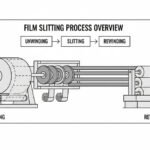
A foil slitting machine is specialized industrial equipment designed to cut large rolls of metal foil into narrower rolls with precise and consistent widths. As a material-specific form of a slitting machine, it is engineered to accommodate the unique properties of foil, including its thinness, softness, and sensitivity to tension.
In many foil processing operations, slitting and rewinding are performed using a slitter rewinder machine, which integrates controlled cutting and rewinding into a single system to ensure stable handling and uniform roll formation for downstream applications.
Fundamental Principles of Foil Slitting Machines
Overview of Slitting and Rewinding Processes for Foil
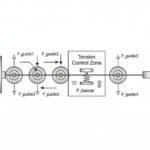
Slitting foil requires a delicate balance between cutting accuracy and material protection. The thin and highly reflective metal web must be slit cleanly while minimizing risks such as tearing, wrinkling, or edge deformation. To achieve this, foil slitting machines apply carefully regulated tension throughout the process, preventing compression or stretching that could distort the material.
The slitting action is synchronized with a precise rewinding process that winds the narrow foil strips into uniform rolls. Consistent pressure and alignment during rewinding help preserve foil flatness, edge quality, and surface integrity, which are critical for subsequent handling and use.
Core Components and Functions in Foil Slitting
Main Mechanical Components for Foil Handling
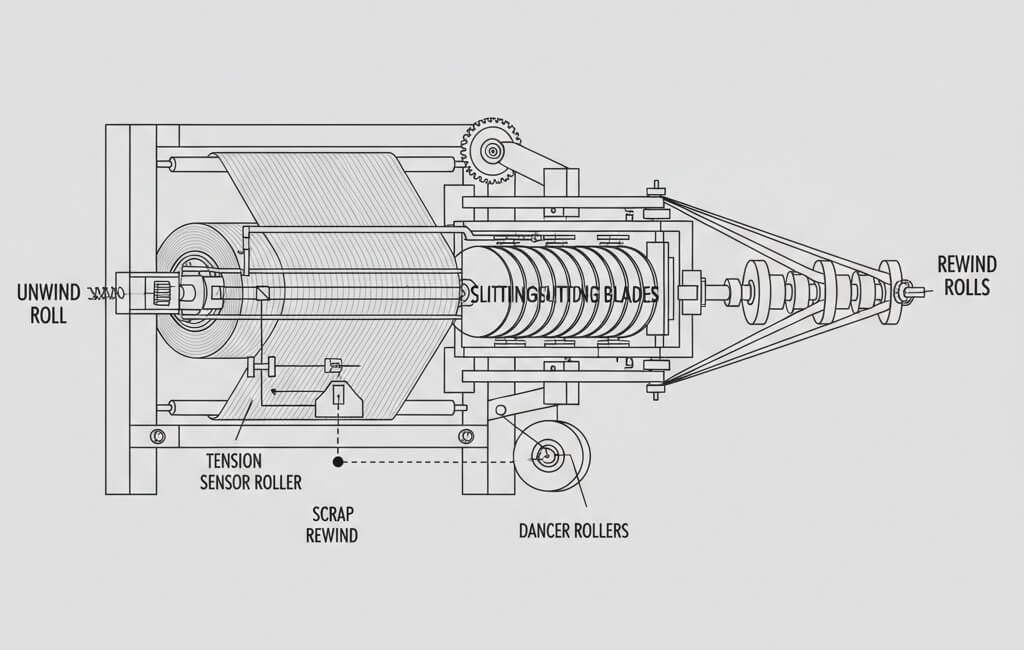
Key mechanical elements include blade holders designed to support extremely sharp cutting tools while minimizing vibration, which is essential for maintaining clean foil edges. The unwind stand secures the large foil roll, and tensioning rollers regulate web tightness to prevent wrinkles or slack. Rewind shafts then collect the slit strips, applying controlled force to keep the foil taut without compressing or deforming the delicate material.
Control Systems Specific to Foil Processing
Control systems in foil slitting machines focus heavily on precise tension regulation and continuous alignment monitoring. Because foil exhibits low thickness and limited tolerance for tension variation, maintaining stable force levels throughout slitting and rewinding is critical to avoid tearing or permanent deformation.
These systems also coordinate blade positioning and rewinding speed to ensure smooth material transfer and consistent roll formation, reducing mechanical stress and preserving surface quality.
Material Factors in Foil Slitting
Foil Properties That Affect Slitting Performance
Foil materials are characterized by their thinness, pliability, and sensitivity to pressure and heat. These properties influence how slitting machines must operate, as excessive force or friction can result in surface marking, edge damage, or loss of dimensional accuracy. Foil’s relatively low tensile strength also increases its susceptibility to wrinkling if tension is not precisely controlled.
Material-Specific Challenges in Precision Slitting
Common challenges in foil slitting include preventing tearing caused by tension fluctuations, managing rapid blade wear that degrades edge quality, and avoiding material buildup on blades due to coatings or surface treatments. Achieving consistent slit widths without burrs requires careful calibration of cutting parameters according to foil alloy, thickness, and finish.
Reference Information and Further Reading
Glossary of Common Terms in Foil Slitting
- Web: The continuous sheet of foil processed through the slitting machine.
- Rewinding: The operation of winding slit foil strips into finished rolls.
- Tension Control: Regulation of force applied to the foil during slitting and rewinding.
Foil Slitting Equipment for Industrial Applications
For manufacturers requiring stable processing of thin metal foils with high edge quality and dimensional consistency, industrial foil slitting machines are commonly used to support packaging, insulation, and decorative foil production.